

A History Of Sun Valley Heli Ski
A history of Sun Valley Heli Ski. Six decades of Idaho’s untracked powder from Bill Janss to Alex Kittrell: 60 Years of Heli-Skiing in the Sawtooths
1964-1965
In 1964, the owners of Sun Valley Company, Averell Harriman’s Union Pacific Railroad, retained the Janss Corporation to determine what to do with the struggling resort. The corporation was a successful family real estate development force in Southern California. They informed Union Pacific that it would take $5 million to bring the facility up to date, but they did not want to invest that and instead said, “If you think the Sun Valley Resort is so good, why don’t YOU buy it?” The Janss Corporation purchased Sun Valley Company for $3 million, and in 1968, Bill Janss purchased Sun Valley from the Janss Corporation.
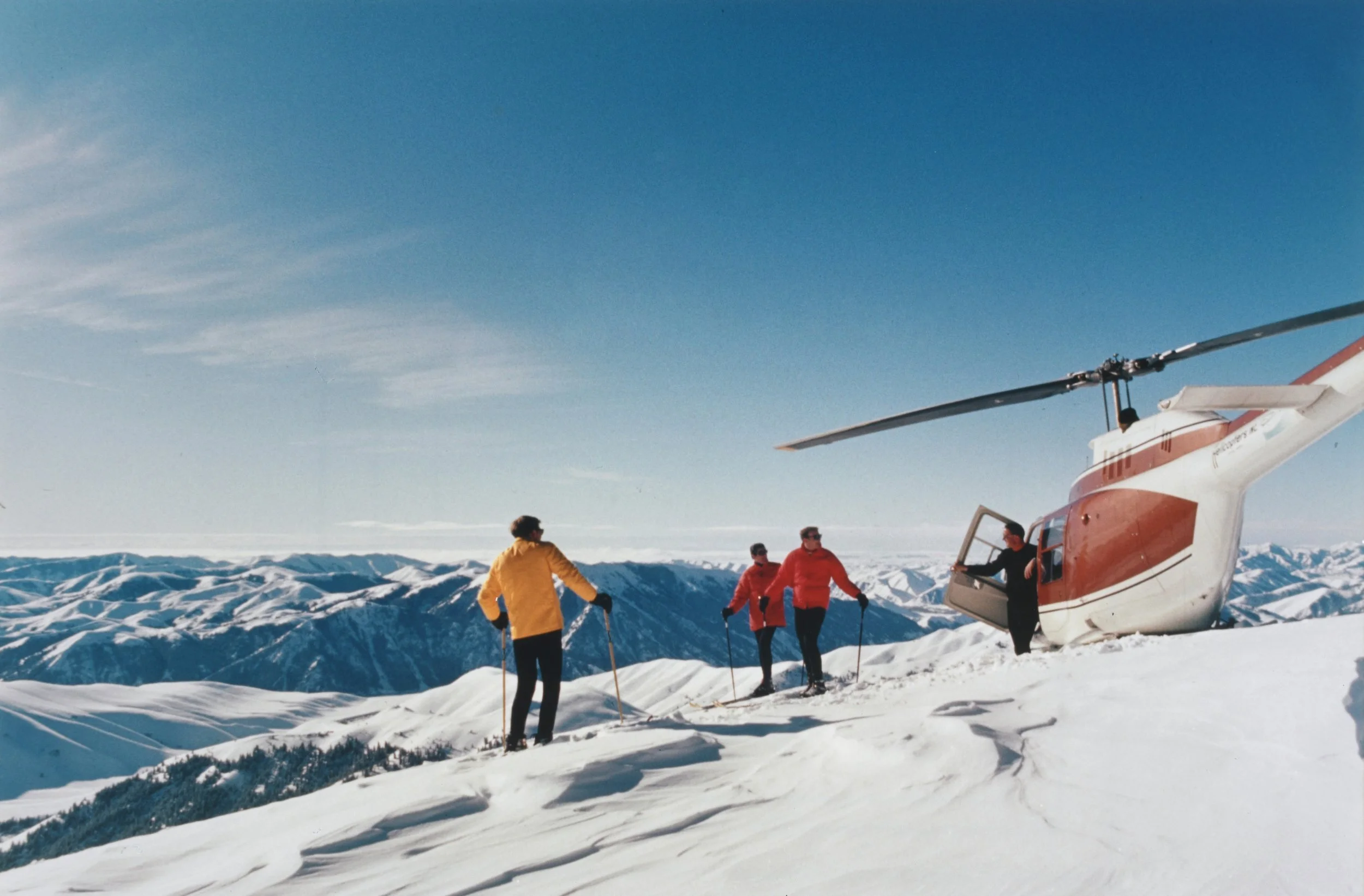
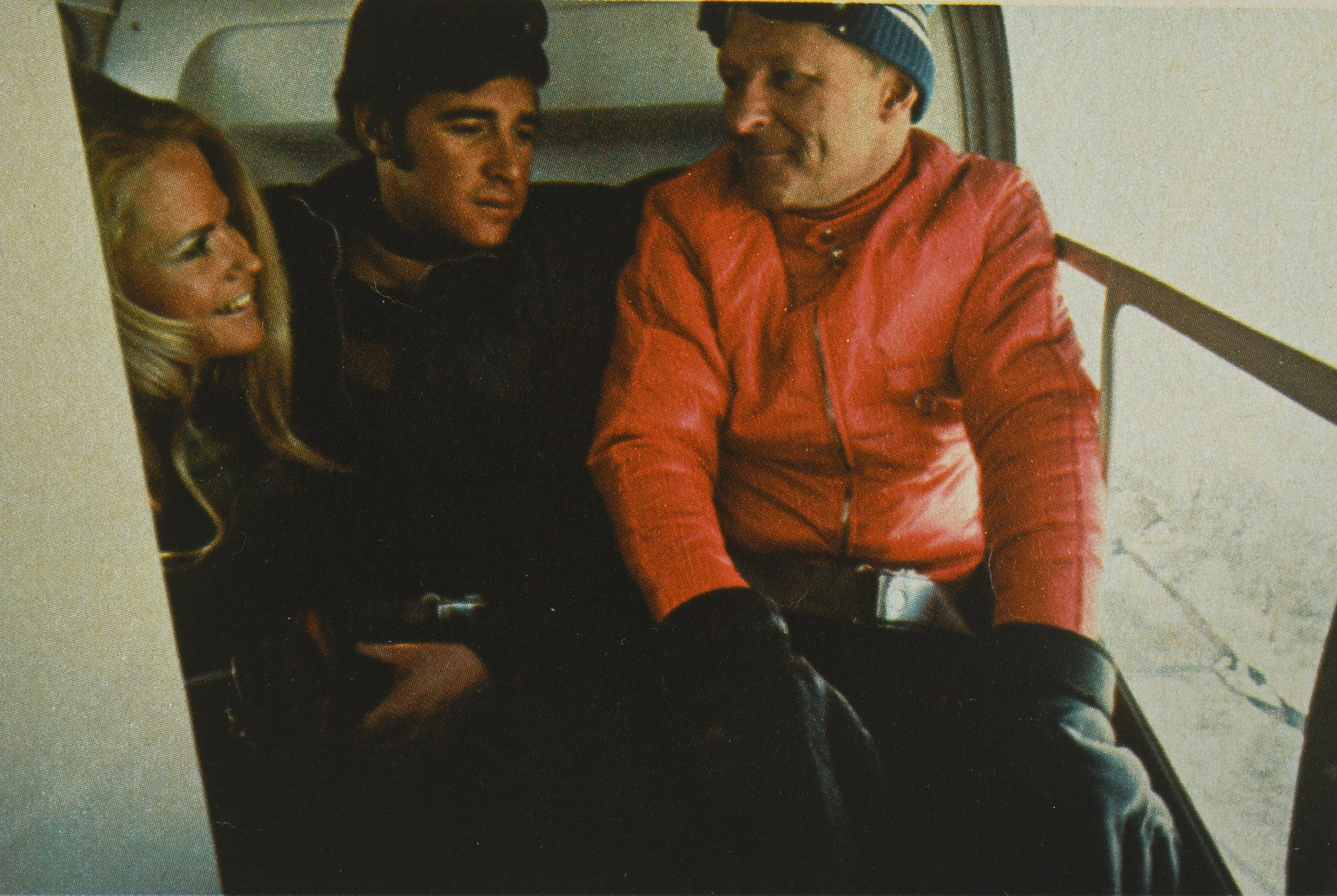
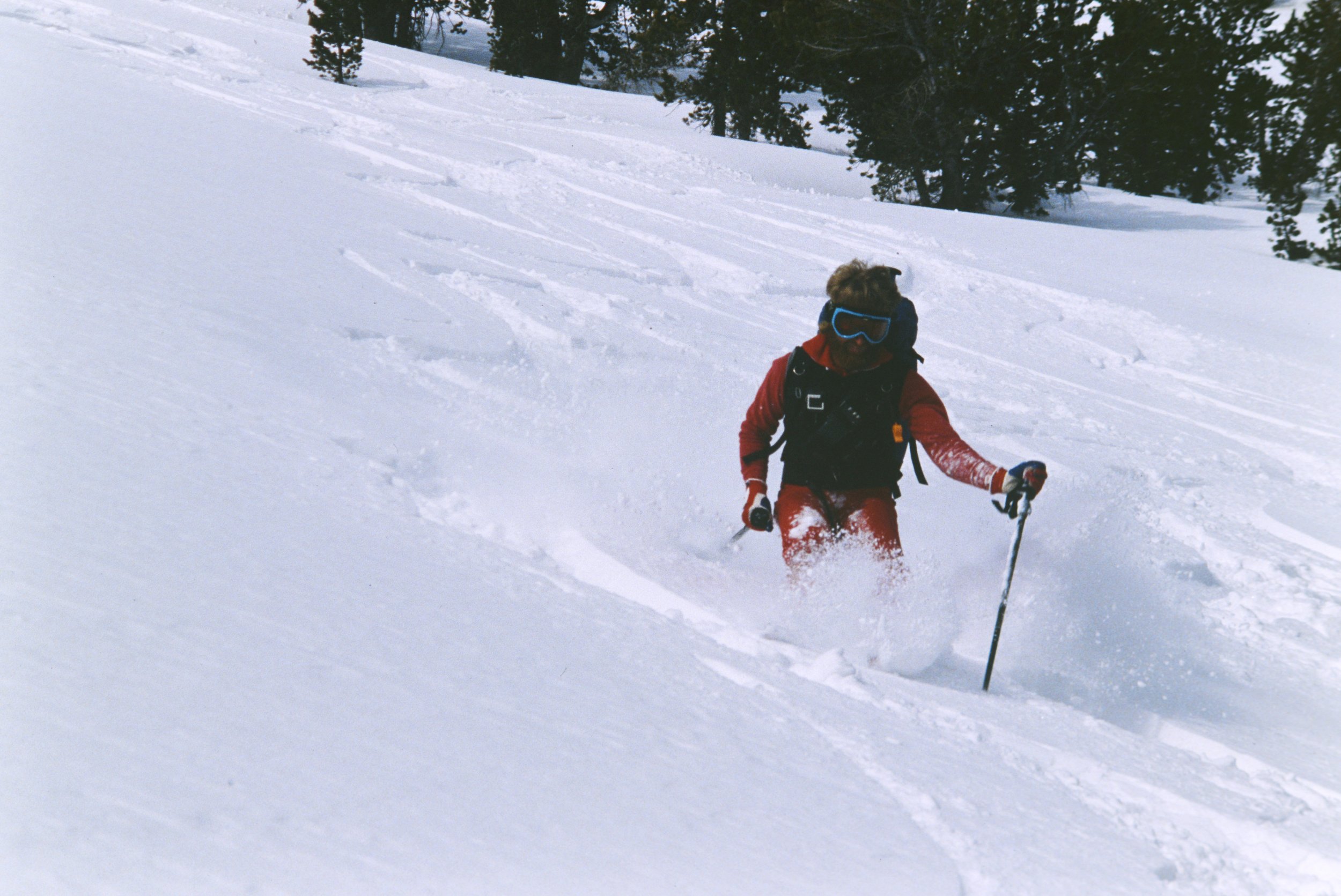
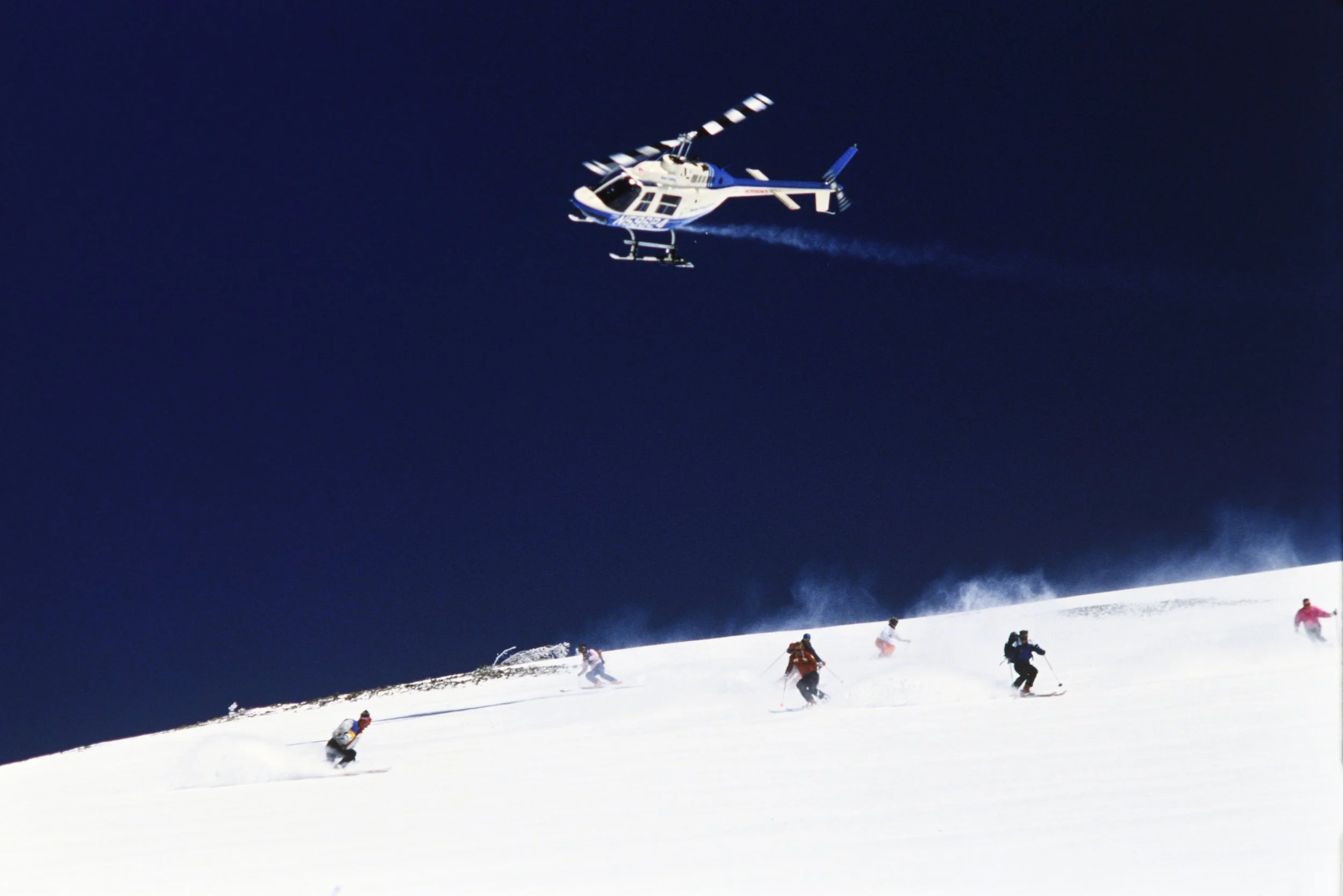
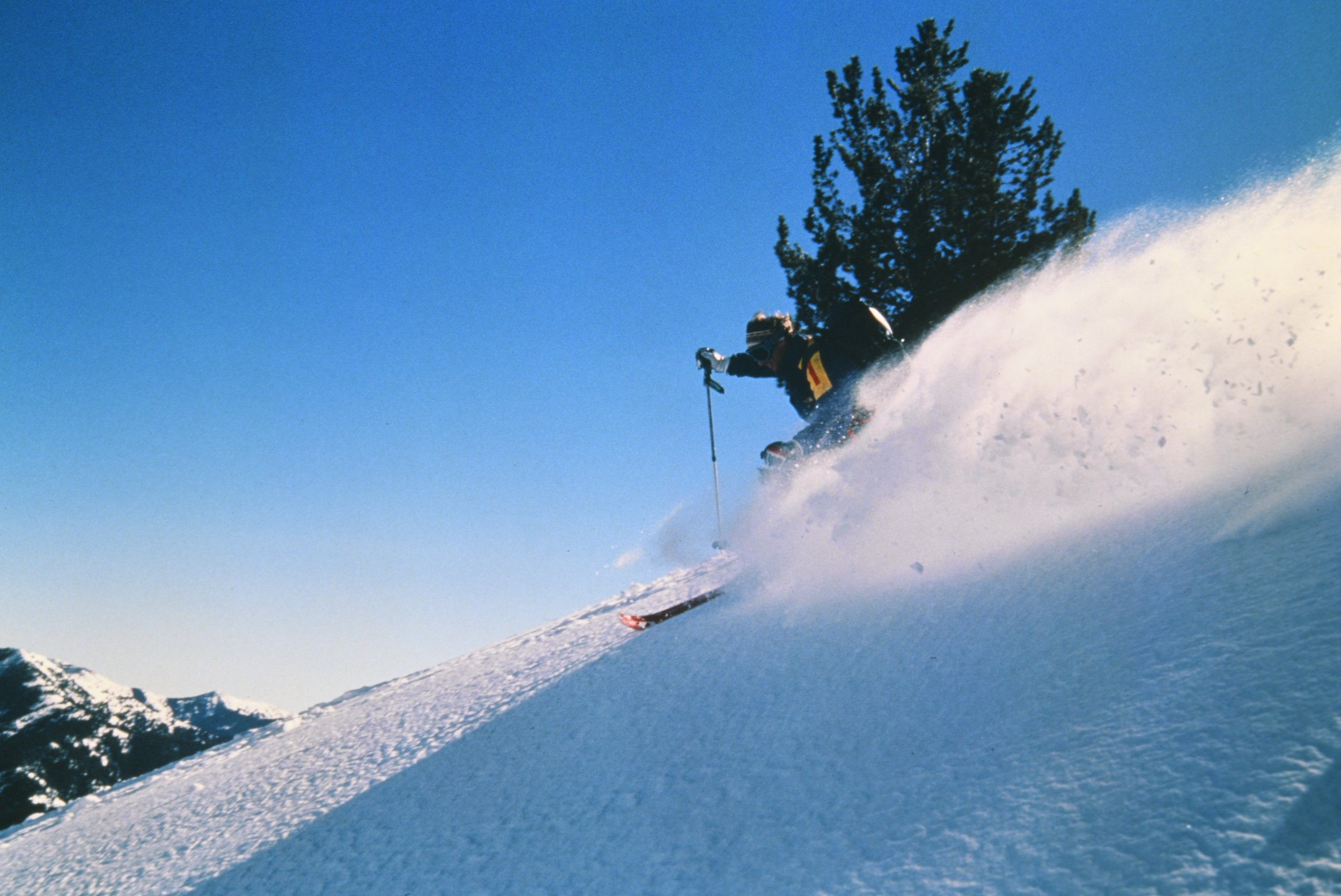
Sun Valley Heli Ski was started in 1965 by Bill Janss. Mr. Janss went heli-skiing with Hans Moser in Canada in 1965. After that experience, purportedly, Mr. Janss went to Whistler and saw a resort-based Heli Ski Company and wanted to make that a reality at the Sun Valley Resort. Janss was inspired by the burgeoning heli-ski movement in Canada and realized that helicopters were the only way to reach the untouched, steep lines of Idaho's backcountry.
For the first few years, it operated as a more non-formal operation, and patrollers were pulled from Sun Valley Ski Patrol to guide guests.
Sam Grossman and Peder Monsen were the operators during this time. Bill Janss and Peder Monsen met at the 1948 Olympics and became very close friends. At those same 1948 Olympics, Peder was invited to the Sun Valley Resort by the owner, Avril Harriman. Peder and Bill met again while Peder was visiting Sun Valley, and this bolstered their relationship. They regularly met to seek out all sorts of adventure and camaraderie, including heli skiing.
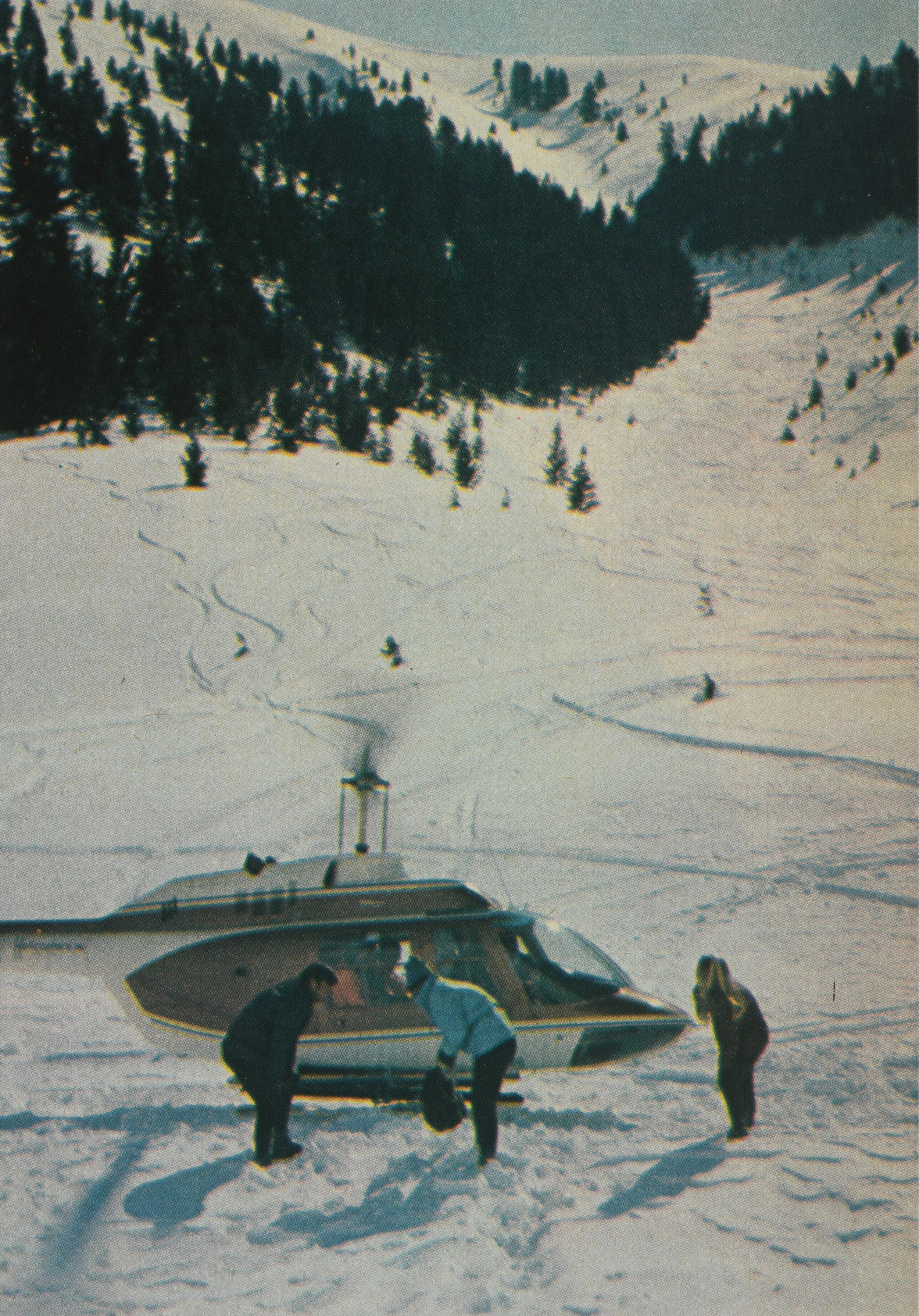
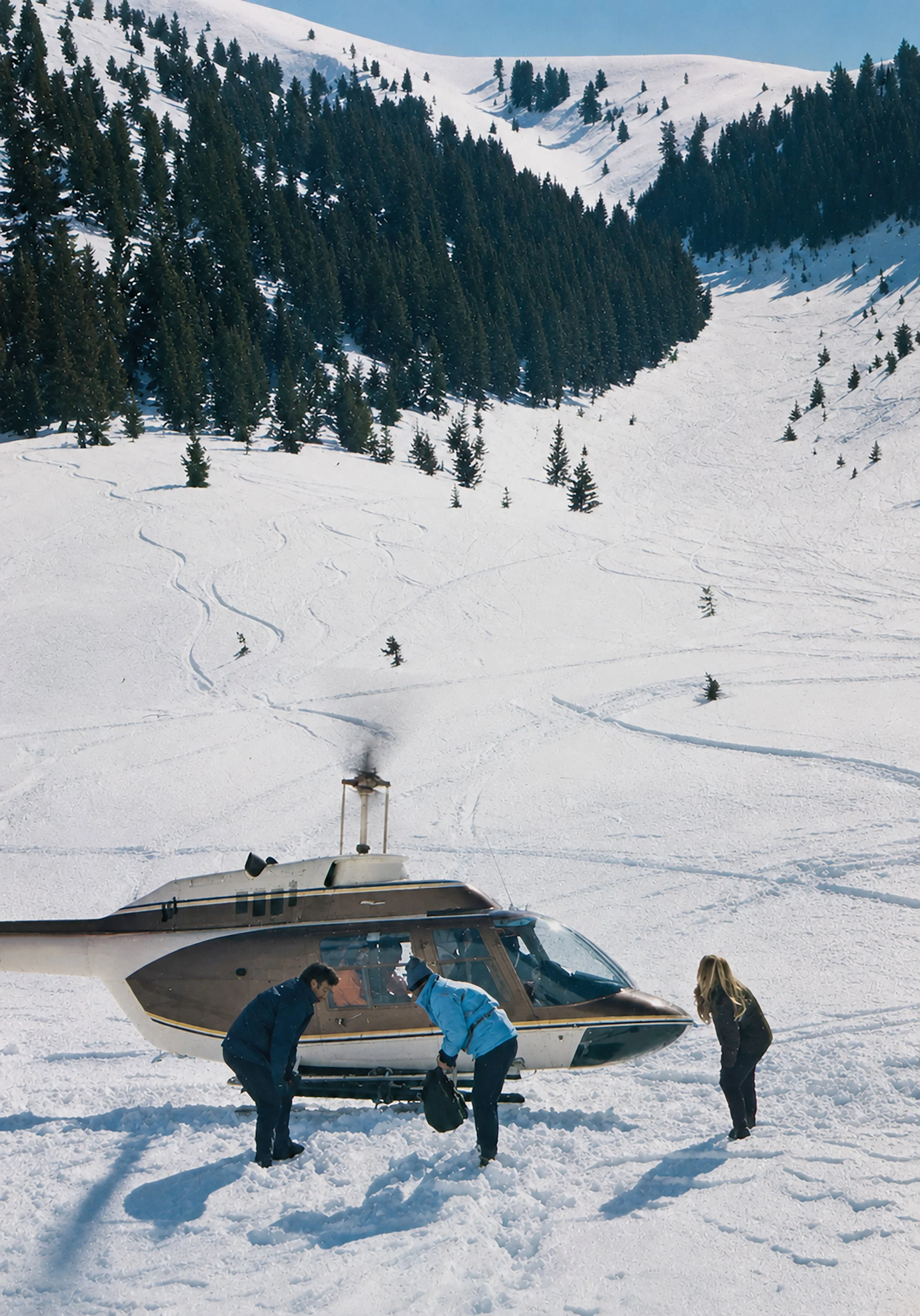
Mr. Janss, Mr. Peder Monsen, and friends heli-skied all over the area. The original aircraft used was a Bell 47 flown by pilot Danny Danielson, which was his own private aircraft.
It started with the simplest of ways: you called Danny Daielson and found out his availability. You and a buddy got in the 3-seat Bell 47, no guides, no forecasting, and flew around. If Danny could land where you wanted, he did.
Many famous names graced the halls of Sun Valley Helicopter Ski Guides in the early years. Mr. Monsen reports names such as Bob Brant, Janet Lee, Hanz Florine, Steve Wynn, Don Brenn, Ted Kennedy, and Stein Erikson, to name just a few.
Finally, to give some perspective on the founder of Sun Valley Heli Ski, in all the accounts of Mr. Bill Janss, the first question asked is “Did you ever meet him.” Directly followed by, “He was a hell of a guy!“
Thanks to Mr. Peder Monsen for his contributions to this section!
Butch Harper starts as the Ketchum Ranger District Recreation Manager. Butch was an integral part of the growth and success of SVHS throughout his years.
1966
The earliest permit on file was from 1966, the first US Forest Service permit for heli-skiing on public land. Even though Bill Janss and others had been heli-skiing for some years, this was the first permit.
1970
Carl Rixon, Greg Morrison, Bruce Malone and Rich Bingham are guides. In 1970, Sam Grossman and Peder Munson bought the Bell 47 helicopter.
“They had a lot of friends that wanted to get involved, but they realized they needed some kind of supervision out there, so that’s how us ski patrolmen got into it” Carl Rixon
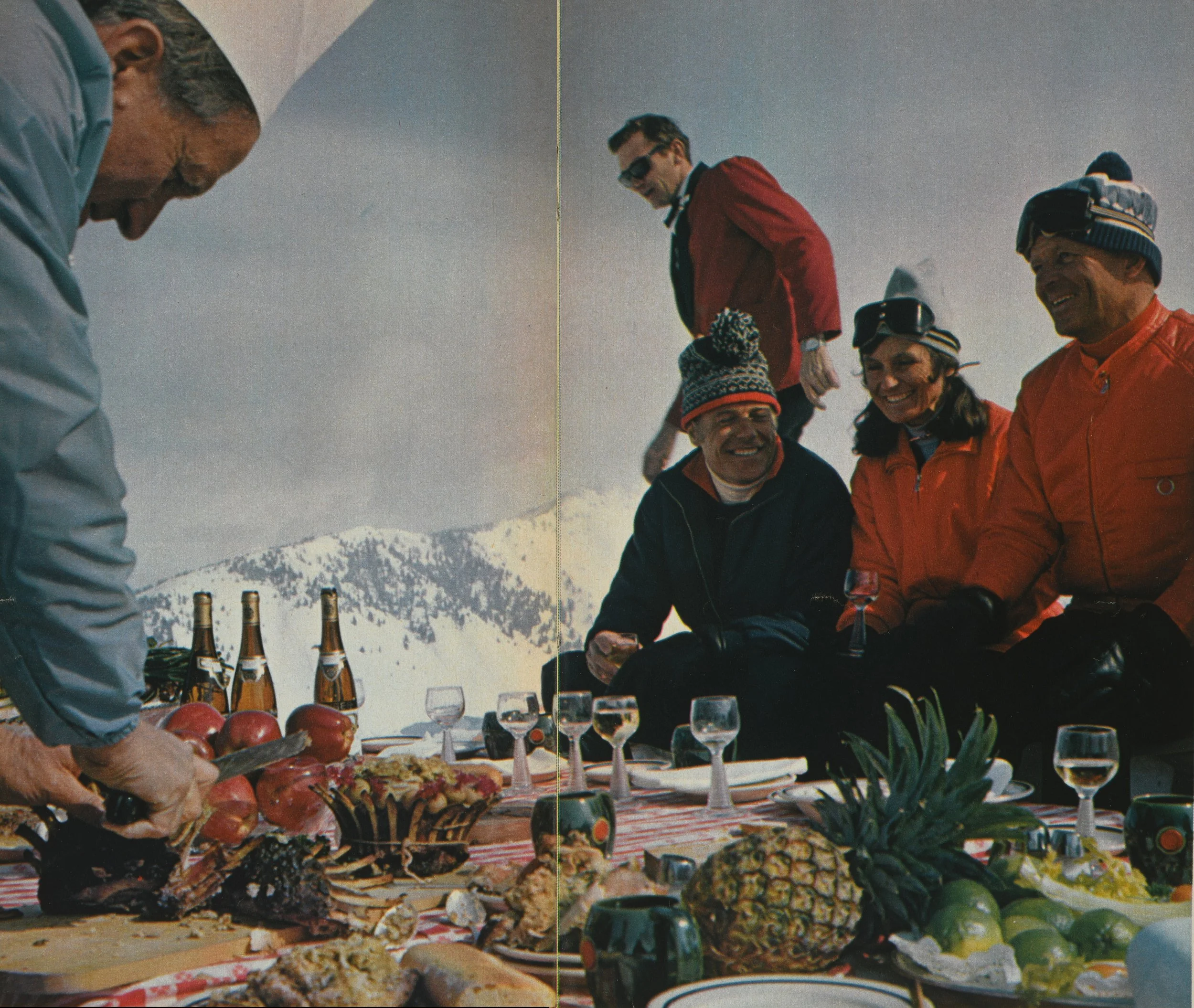
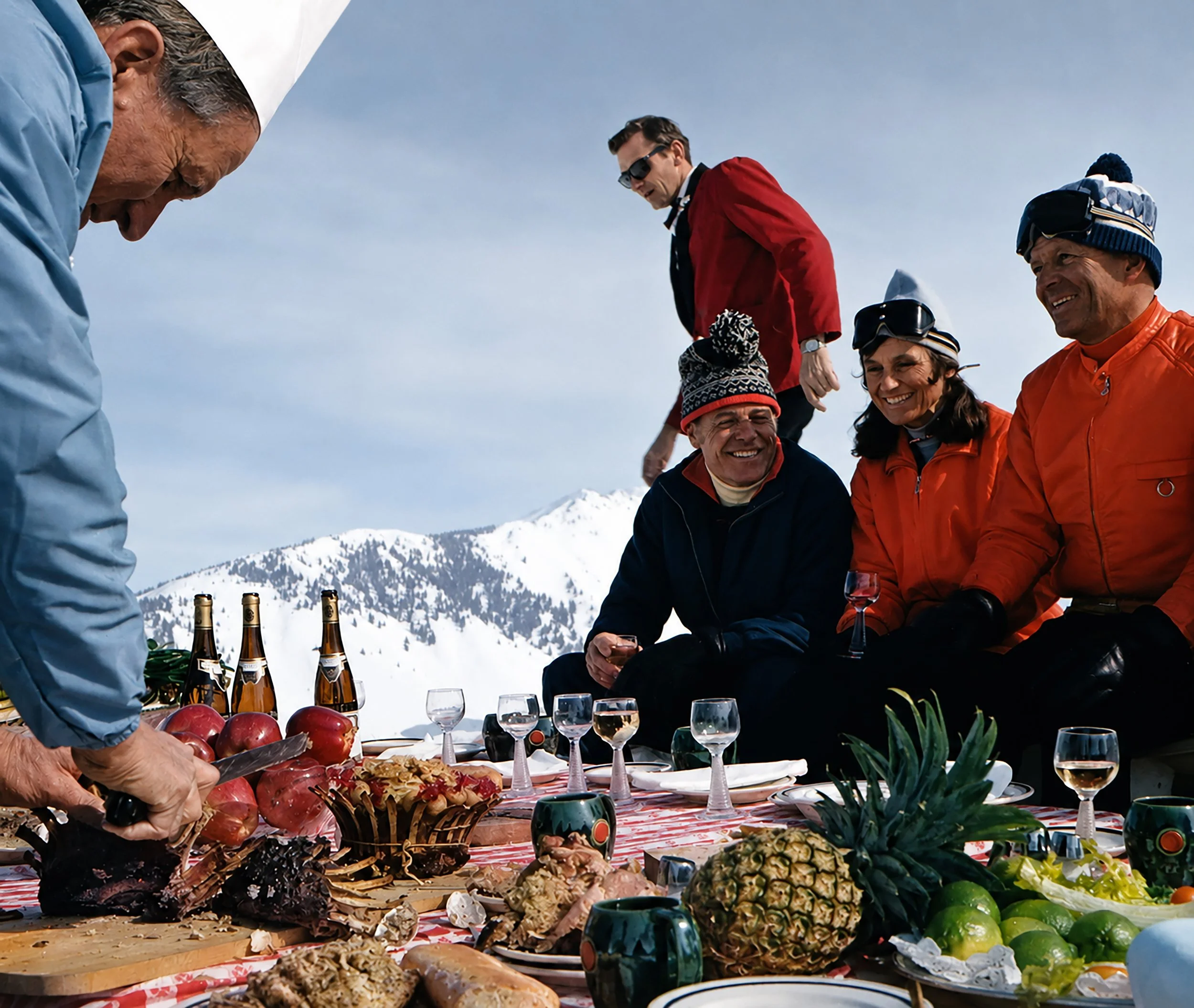
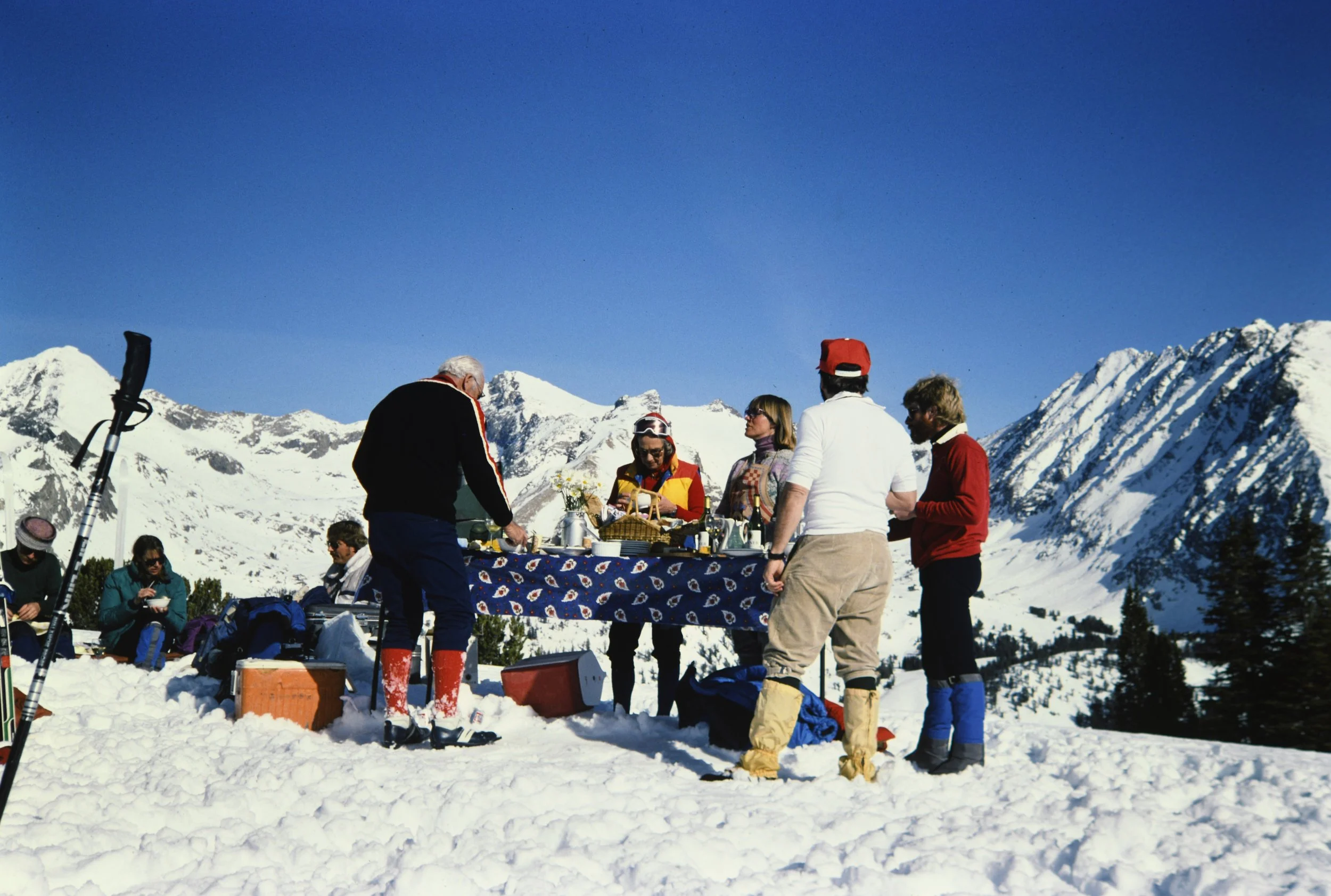
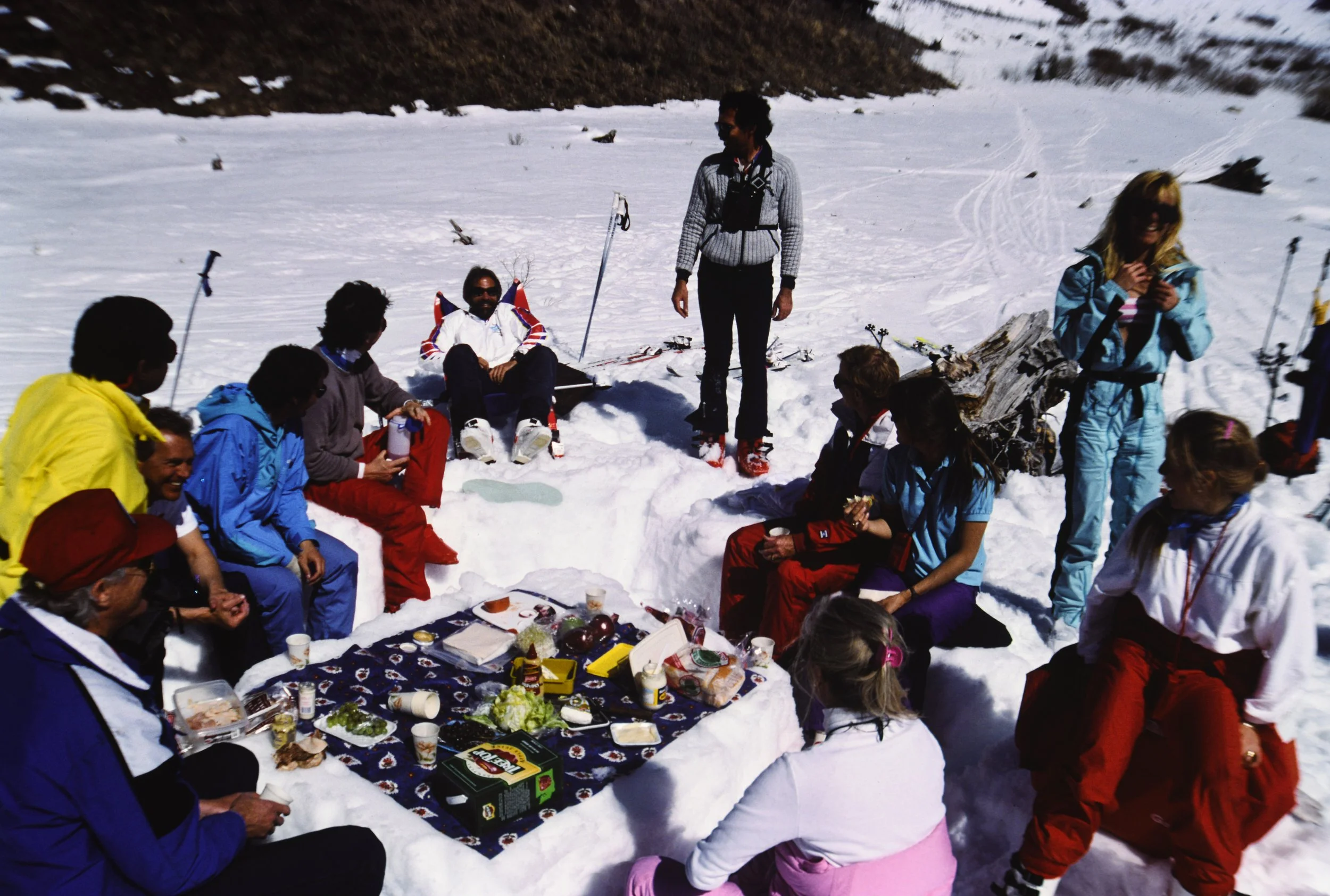
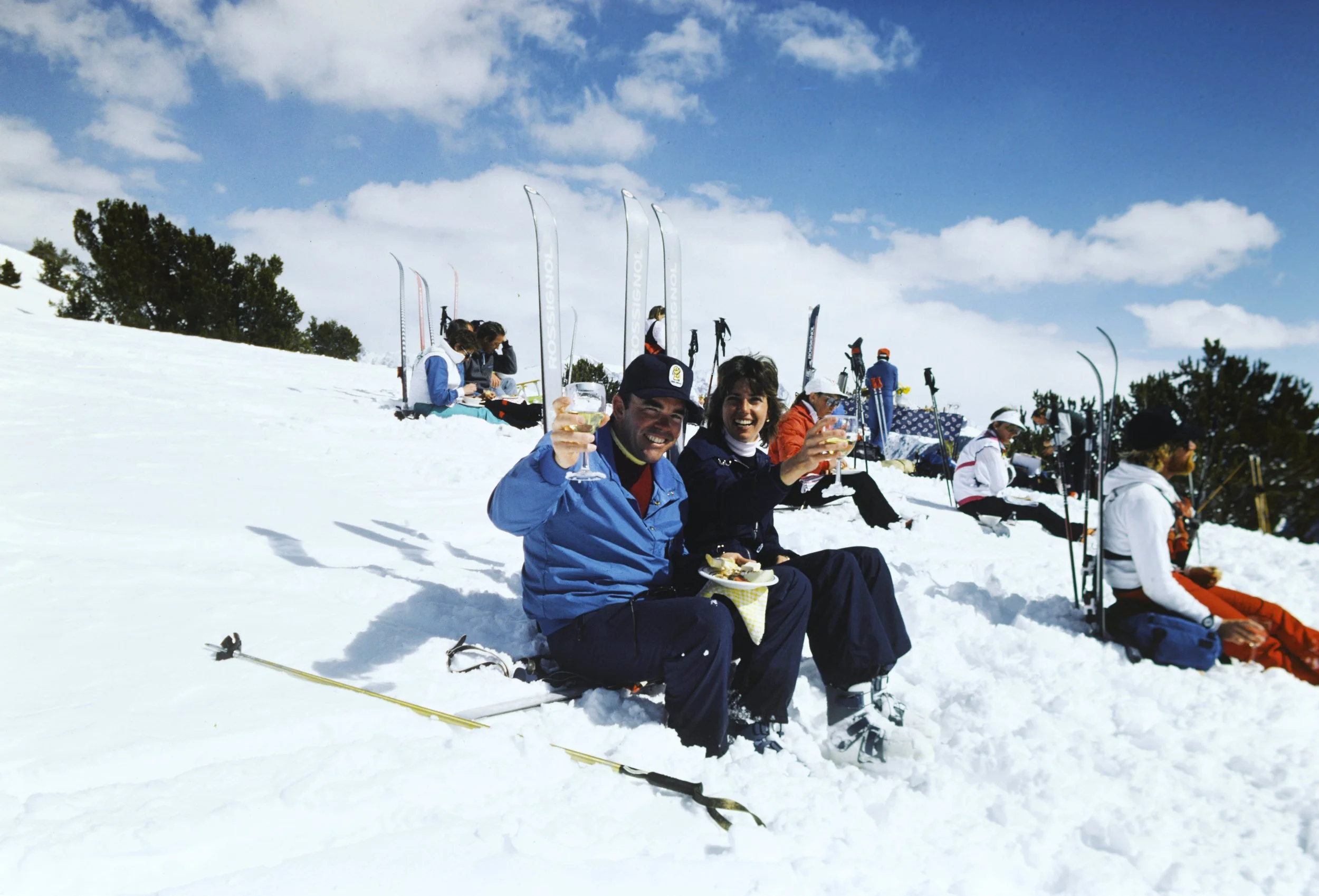
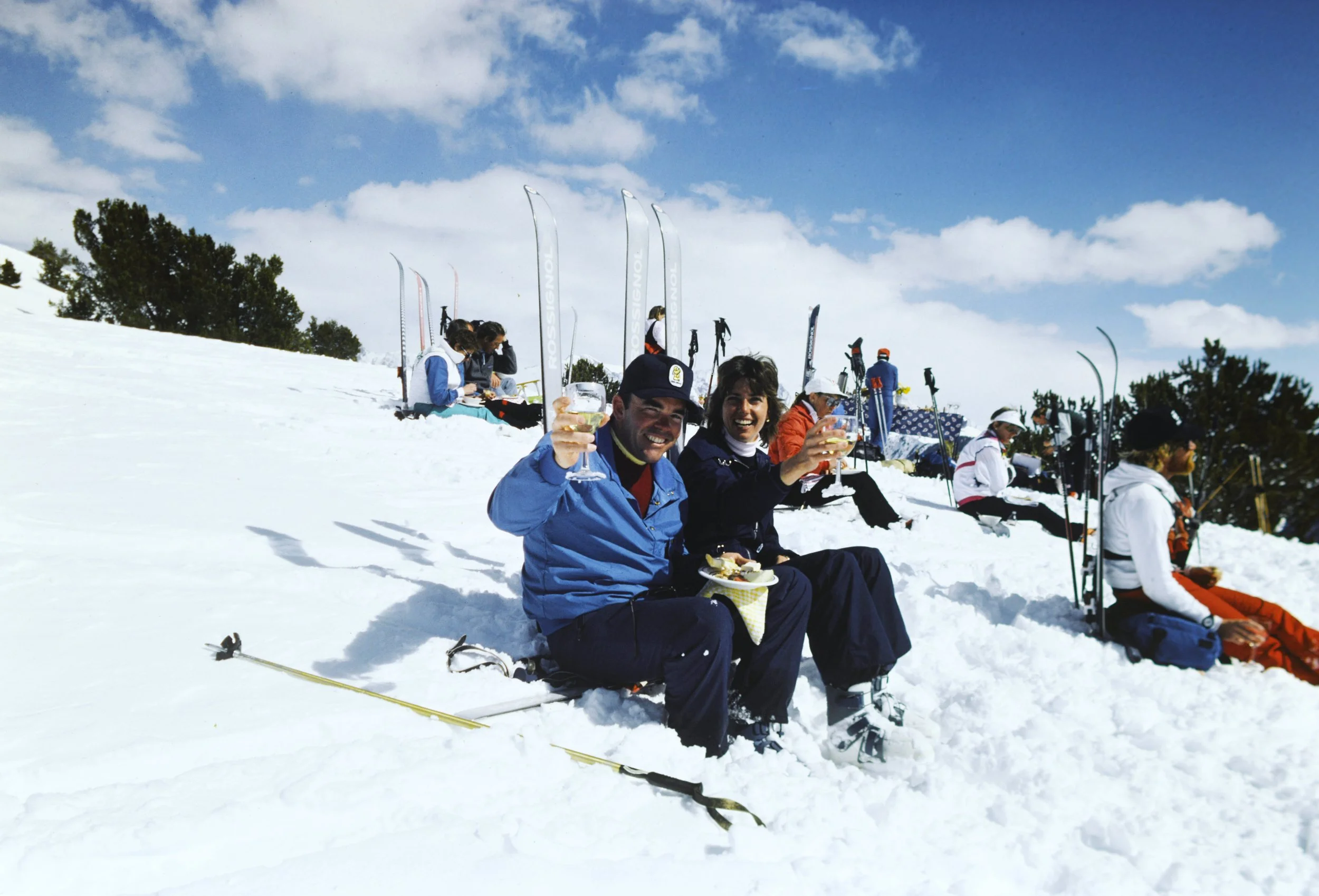
An article in Look magazine, February 1970, showed America how Bill and Anne Janss liked to heli-ski. Fly in your maître d’, lay out a picnic consisting of pate, caviar, a crown roast, and bottles of white wine on boards laid in the snow with a checkered tablecloth. Combine good food and drink while you ski the untracked terrain.
“They had a lot of friends that wanted to get involved, but they realized they needed some kind of supervision out there, so that’s how us ski patrolmen got into it.”
— Carl Rixon
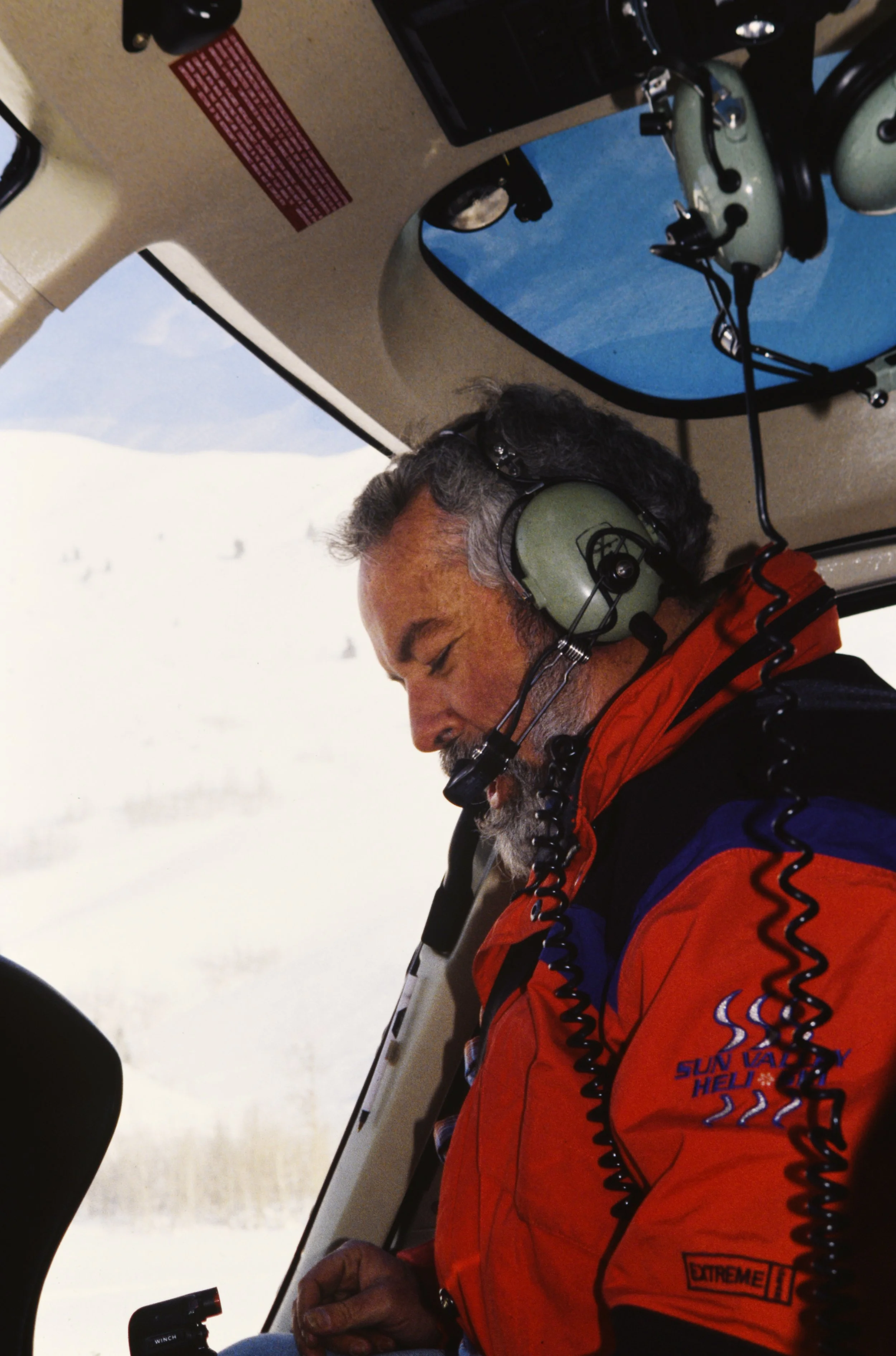
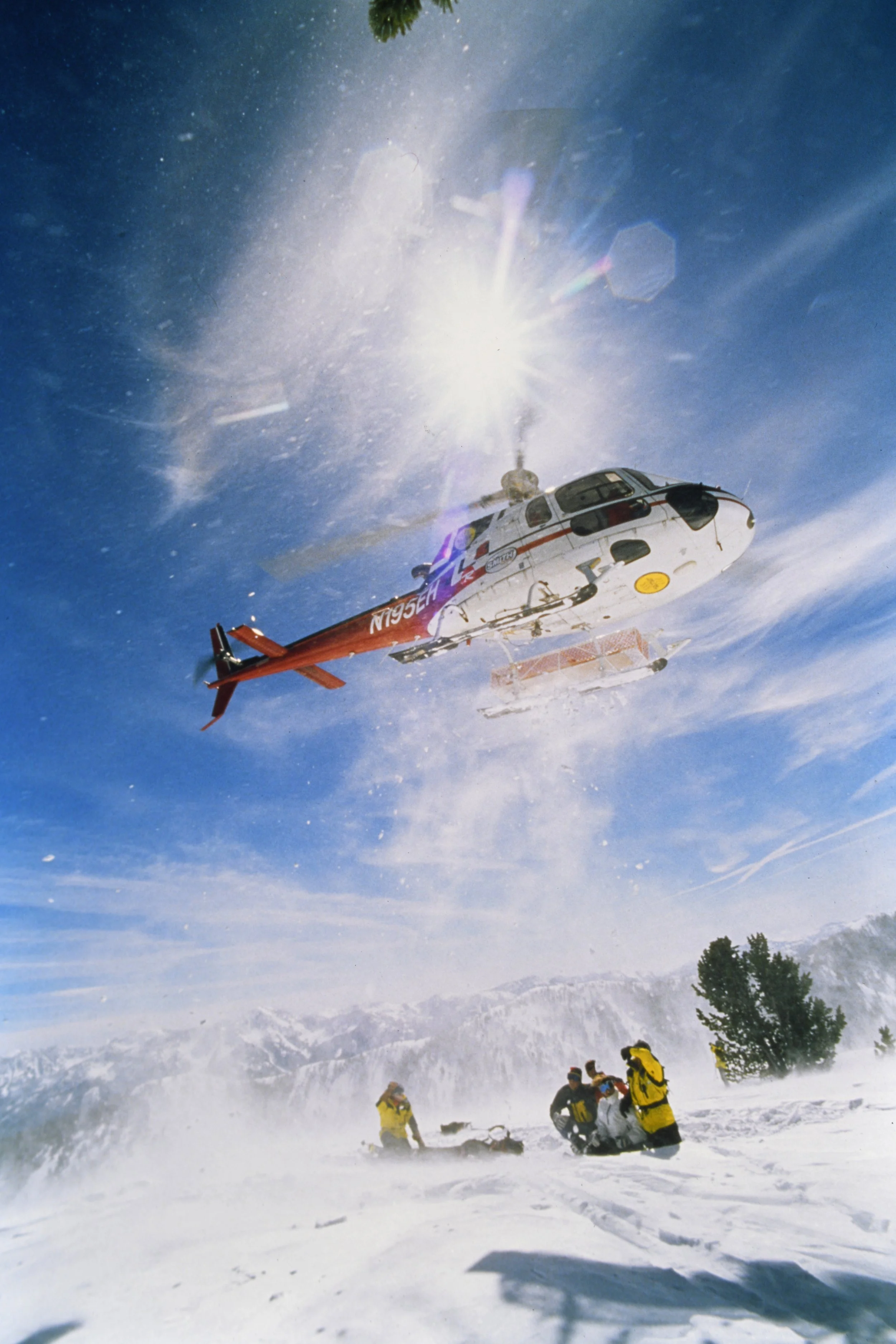
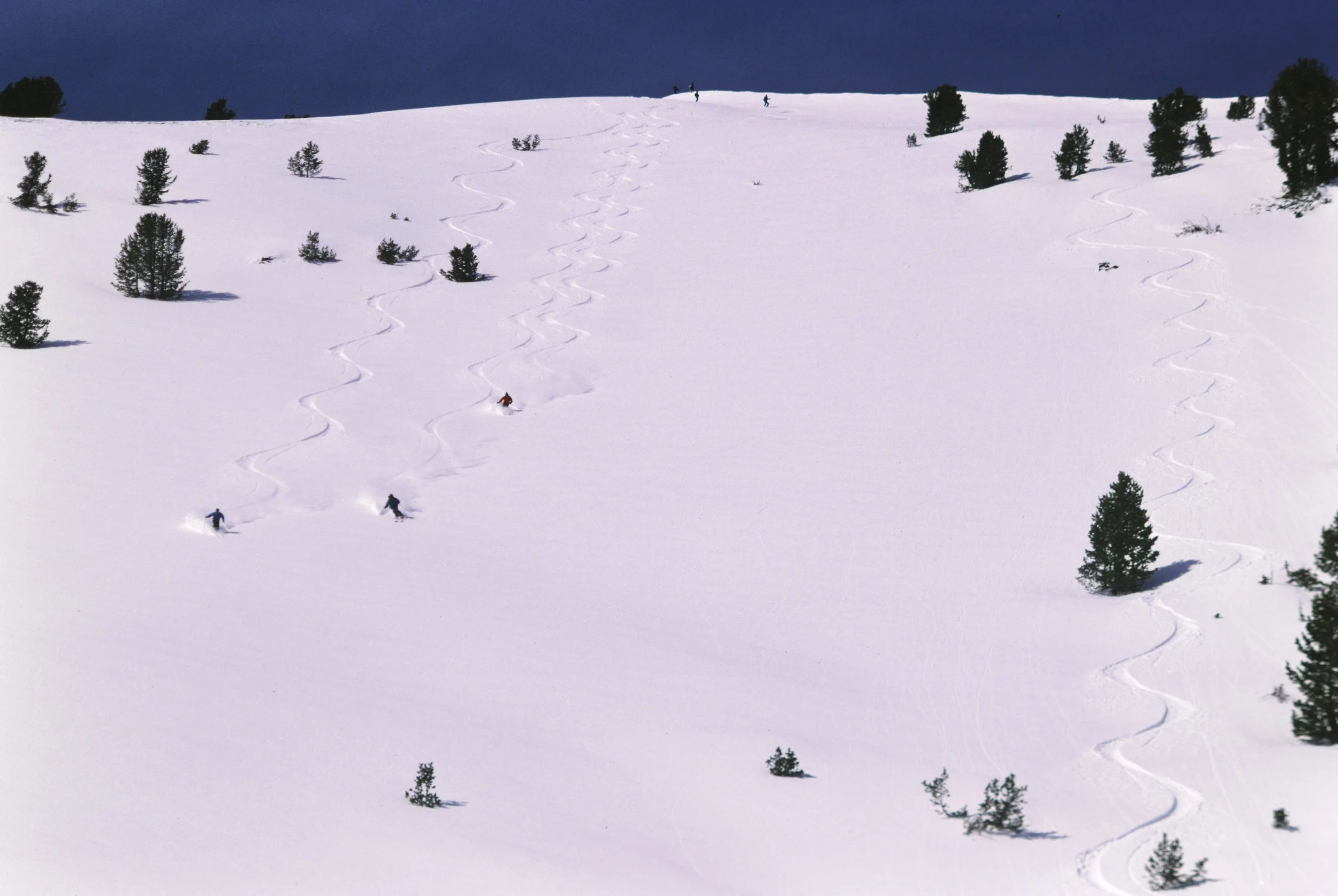
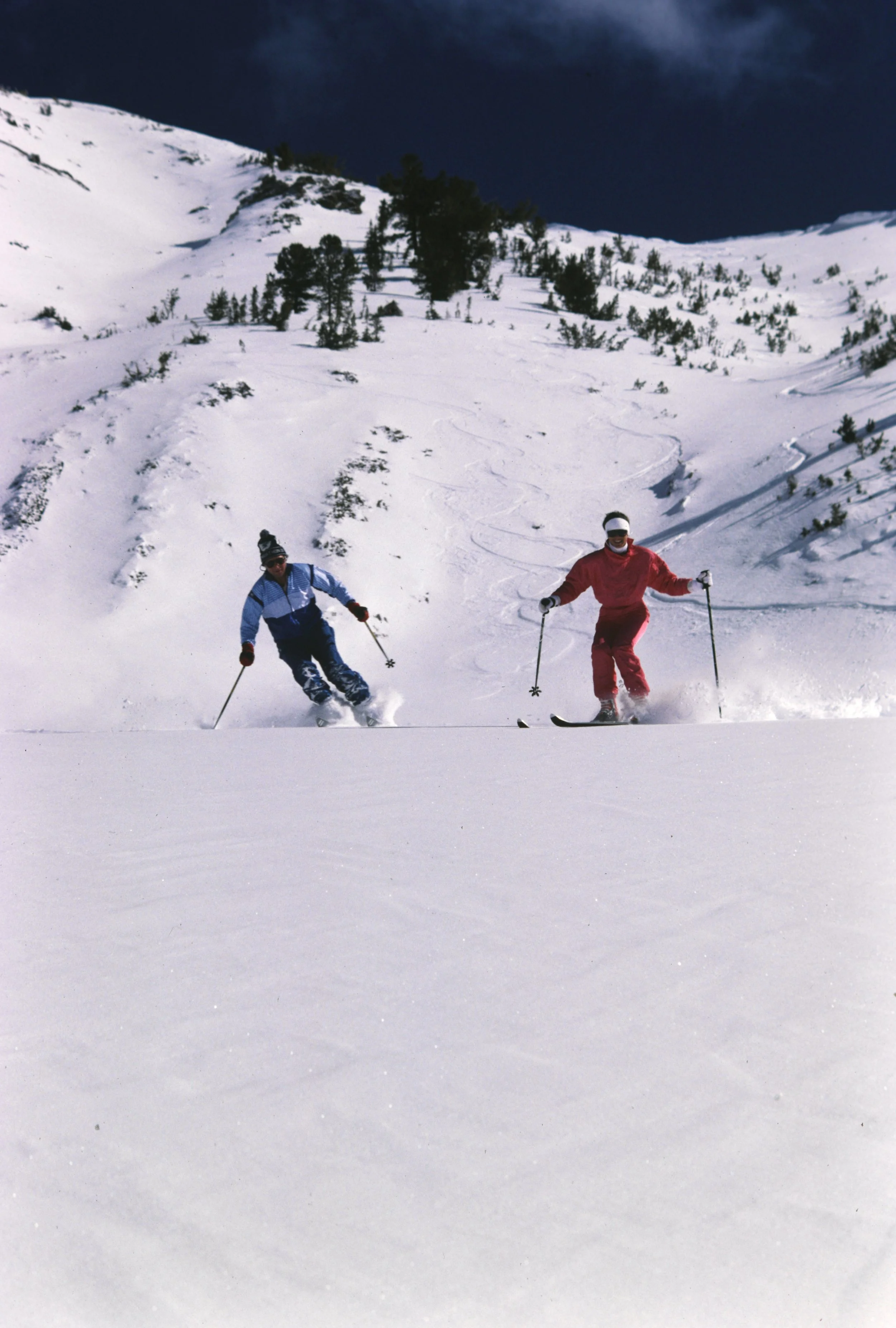
1970-1972
Carl Rixon, Greg Morrison, Bruce Malone, Roger Bergdahl and Rich Bingham are ski patrolling and working as guides when they are needed to take clients heli-skiing.
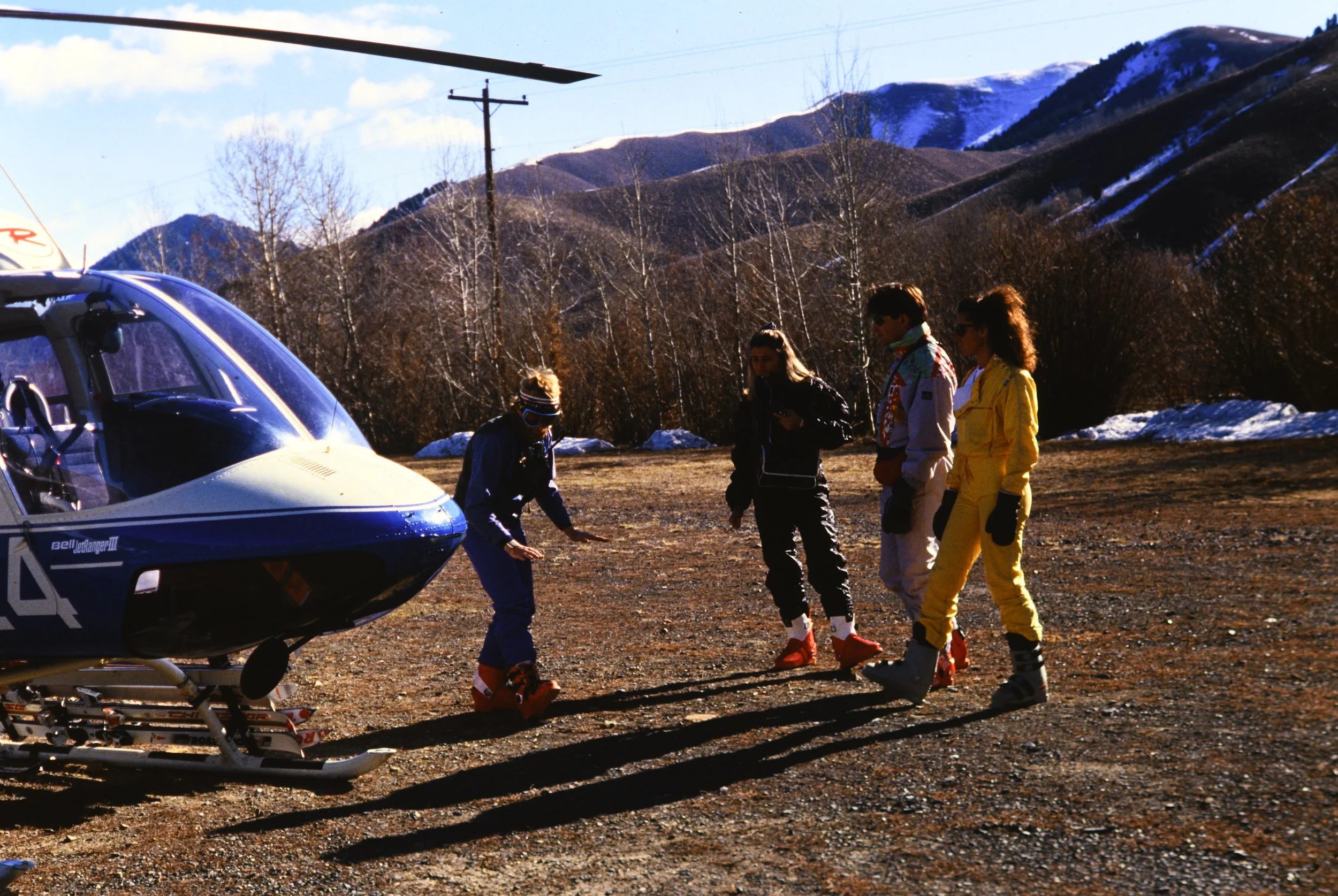
As the business grew, Danny Danielson worked with Gem State Helicopters to bring in an additional pilot and a Jet Ranger to cover the growing popularity of getting out into the backcountry. Dan Kettle was often that other pilot.
Carl Rixon used to fly a 1940 Taylor Craft airplane over the area searching for runs.
1972/1973
The Sun Valley Company starts an official guide service. Bob Seavy operated the guide service for one year in its first official year. His brother Jay Seavy was running ski patrol at the time.
In January 1973, Anne Janss died tragically in an avalanche in the Balcom, the furthest bowl skier's left.
The group was on their last run in the afternoon, and she was the only fatality. Sam and Peggy Grossman were also in the slide. Butch Harper did not have a good feeling and tried to get them to move from where they were skiing. With that he planned out his escape route and was not buried.
Although he lost his wife in that accident, Bill Janss wanted Sun Valley Heli Ski to continue. He and Ann loved the backcountry, and he was not going to let the accident stop the business.
Although a tragedy, Anne’s death caused other heli-ski operators to become more professional with their equipment and guides.
1973/1974
Greg Morrison takes over managing the operations for the guide service.
Carl Rixon went to Snowbird and Skadi's avalanche beacons were ordered for heli-ski guests and all patrollers, from Joe Royer.. They had just debuted the previous year, an example of Sun Valley Heli Ski’s commitment to the safety of their guests.
The guide service operates with Greg Morrison running the program and Carl Rixon, Rich Bingham, and other patrollers guiding.
Butch Harper went down to Utah to learn more about avalanches.
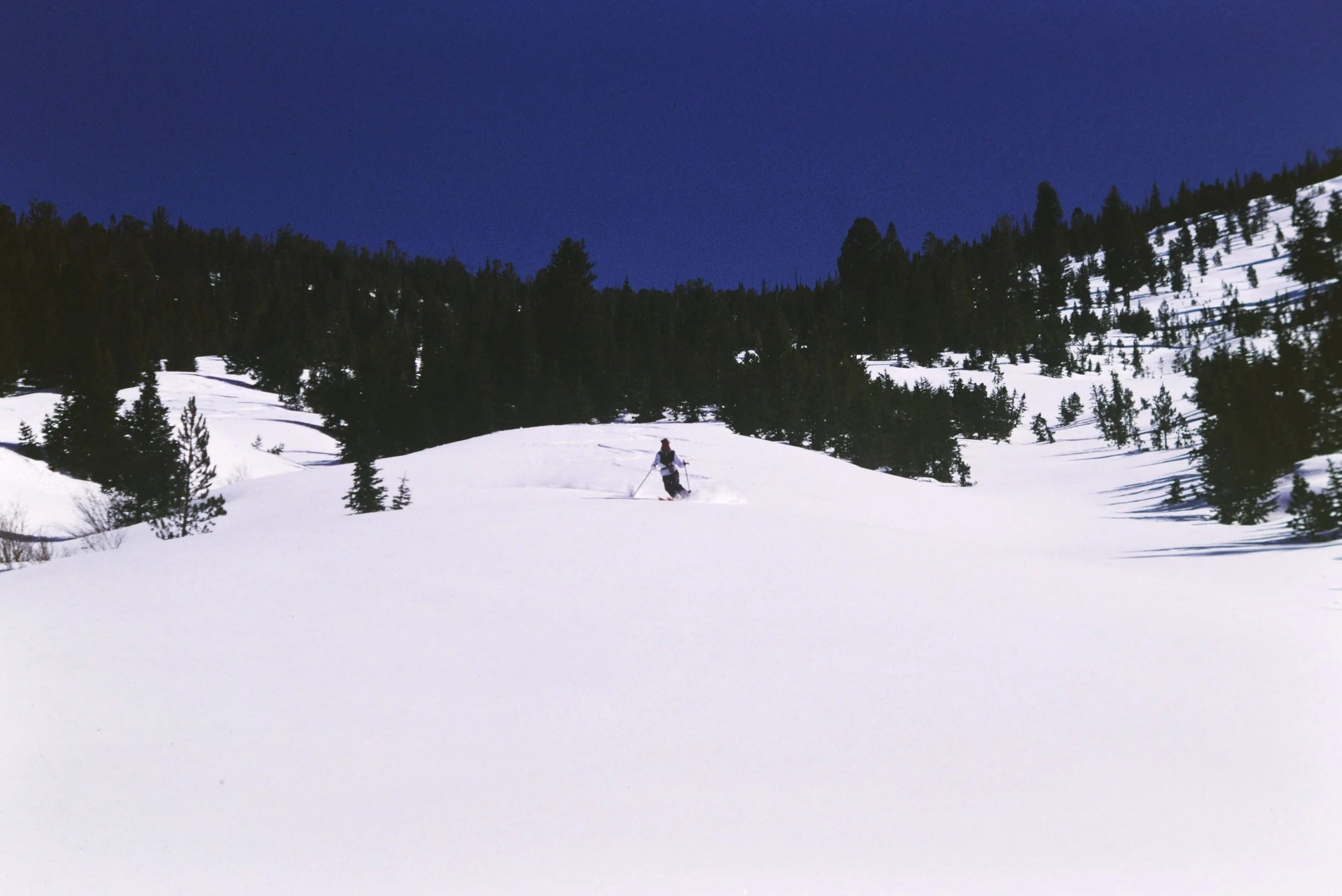
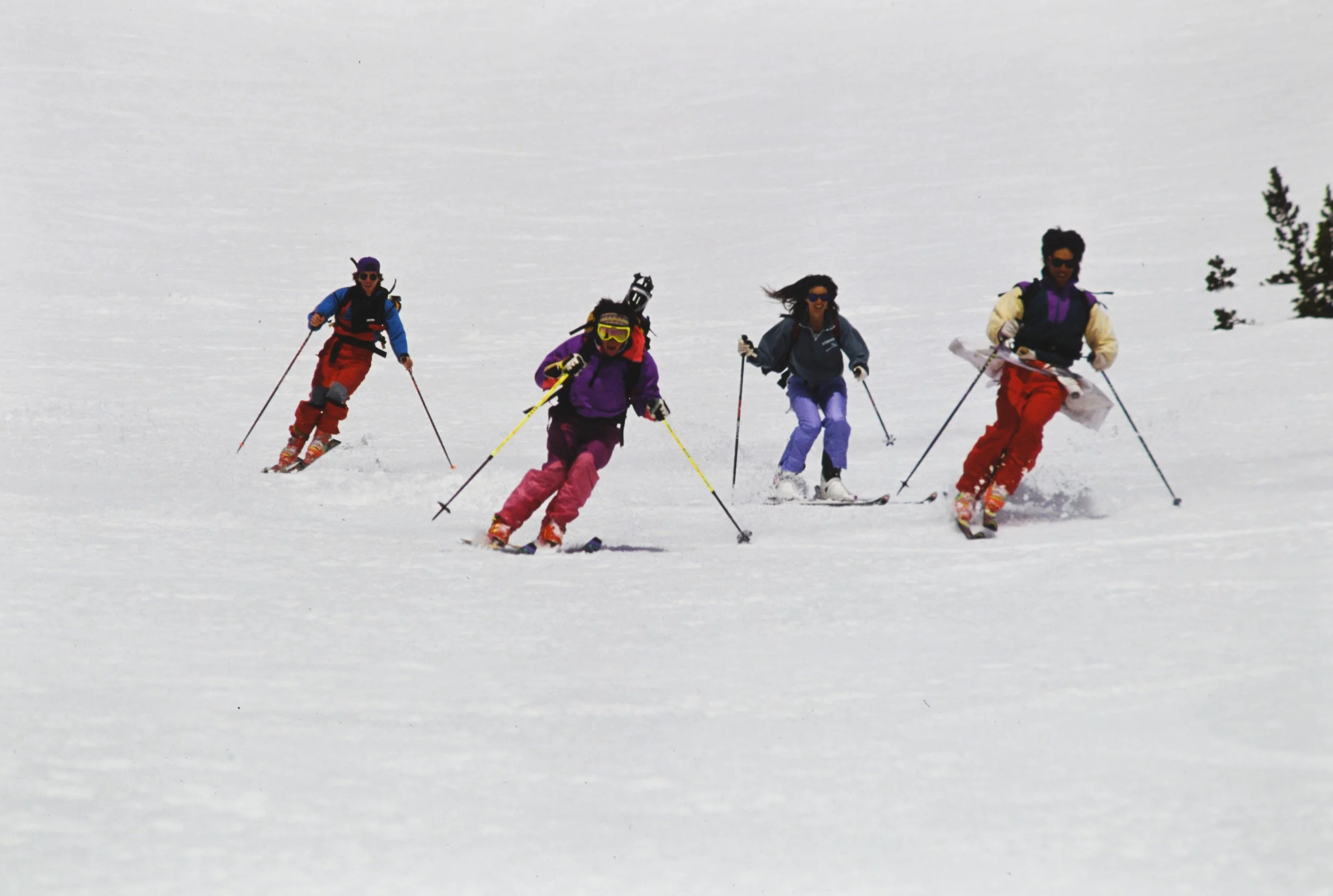
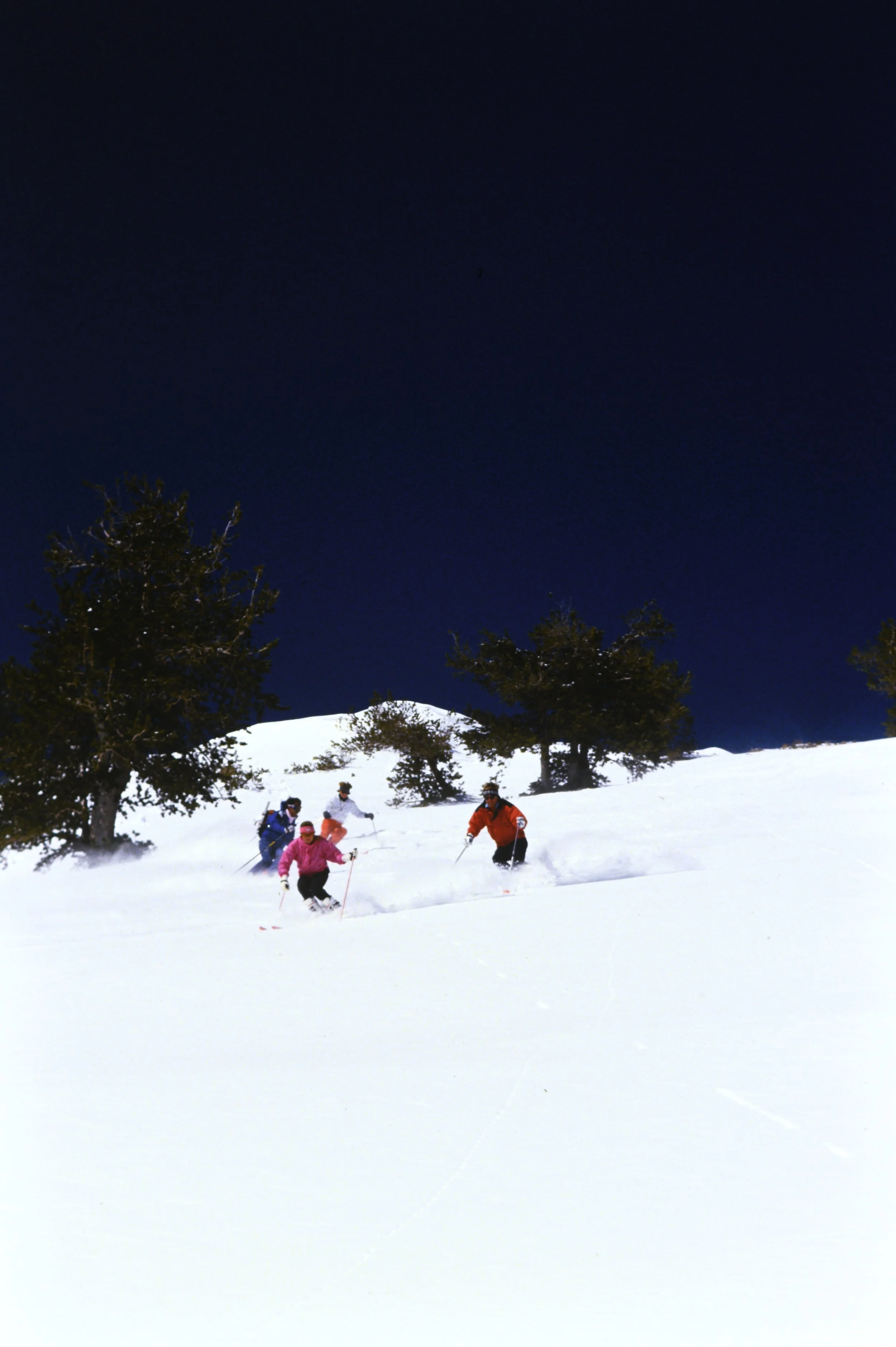
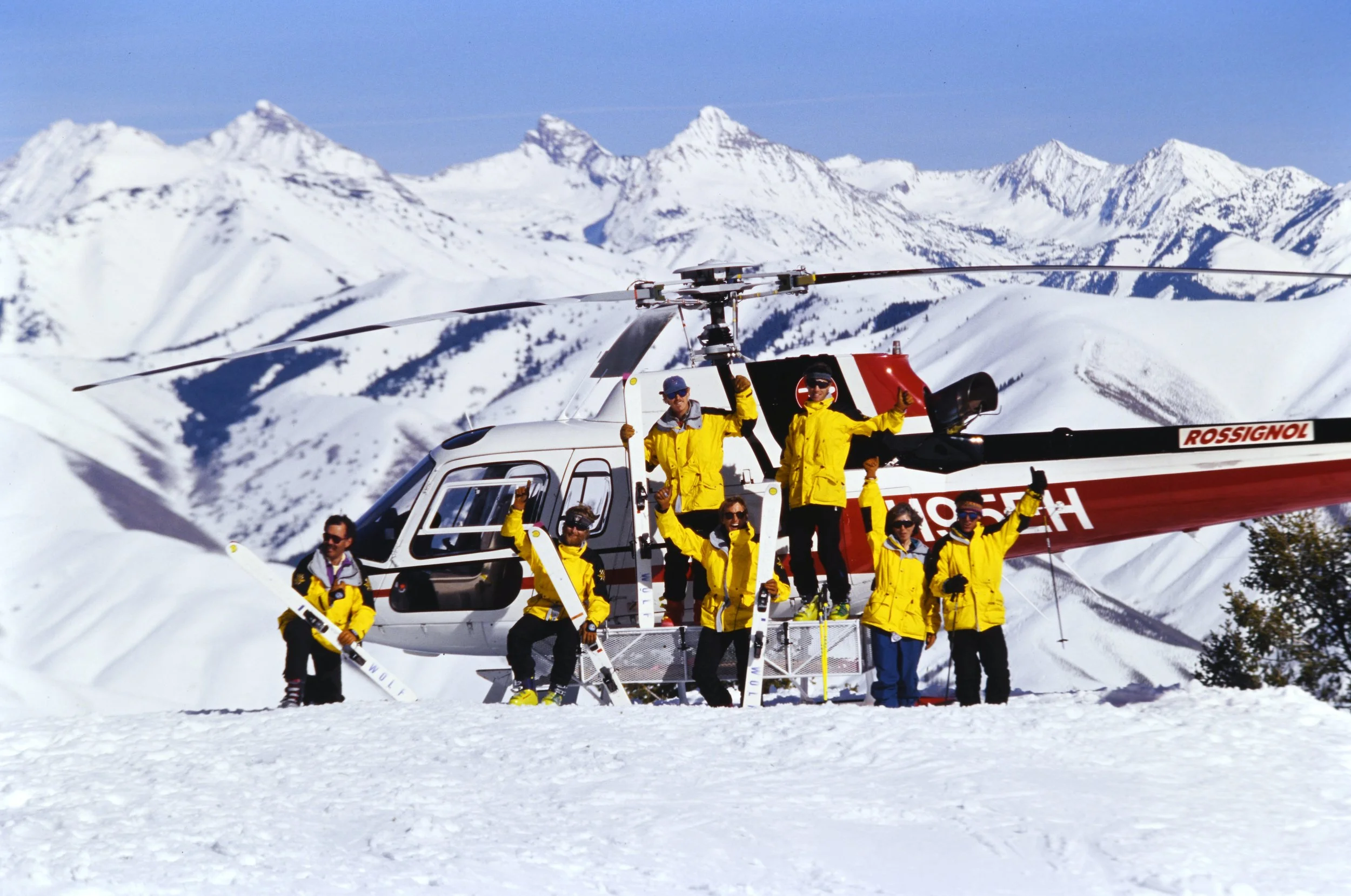
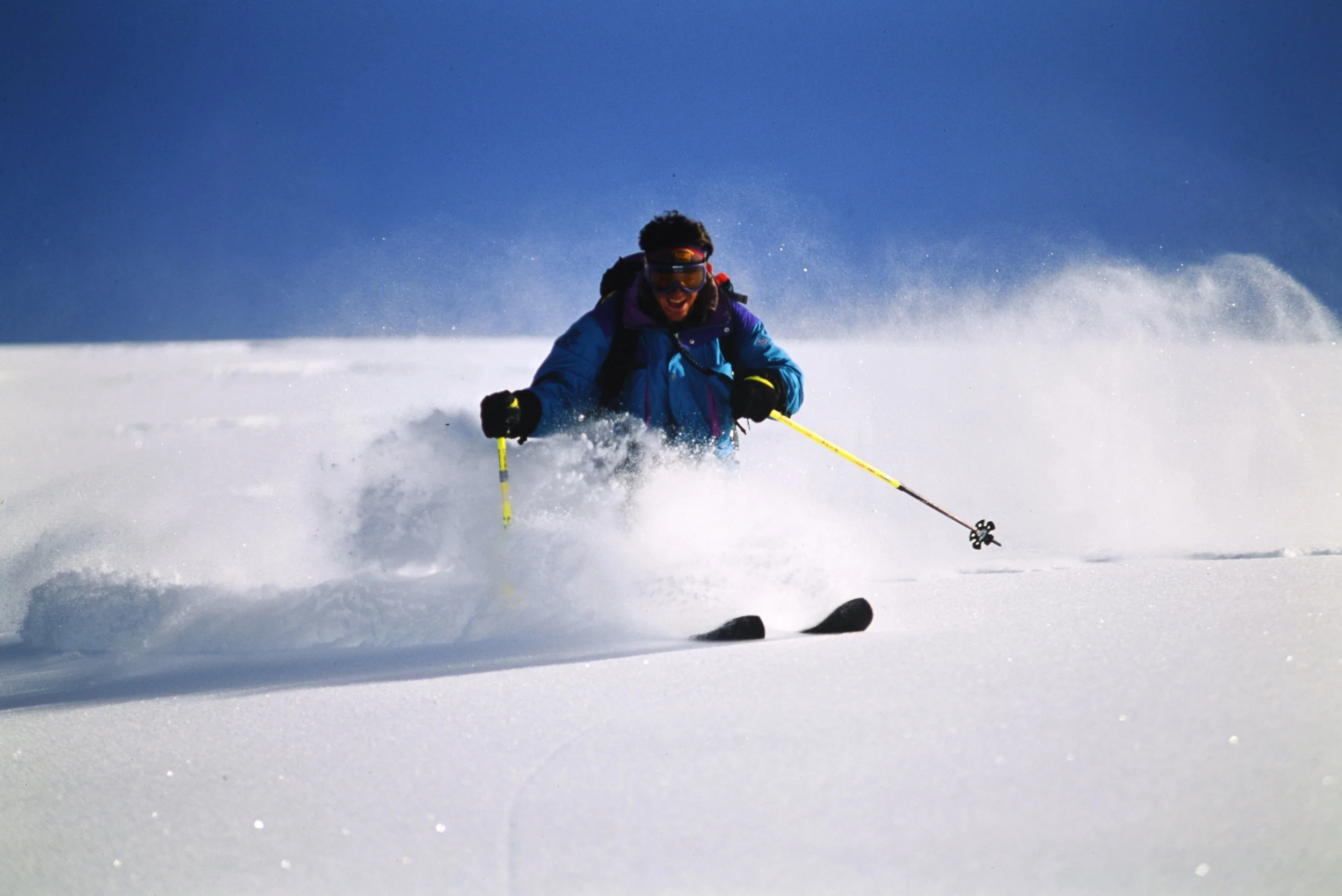
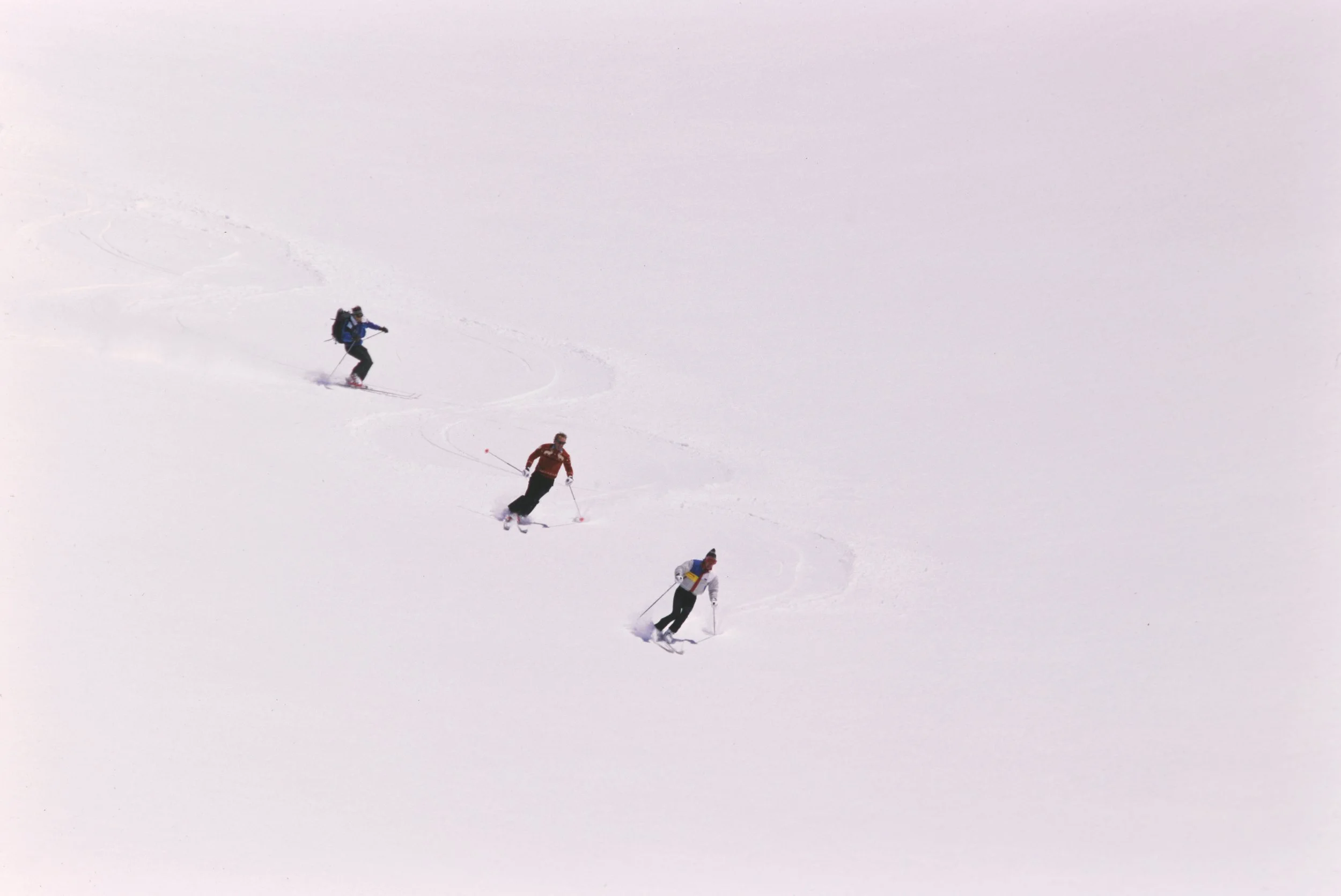
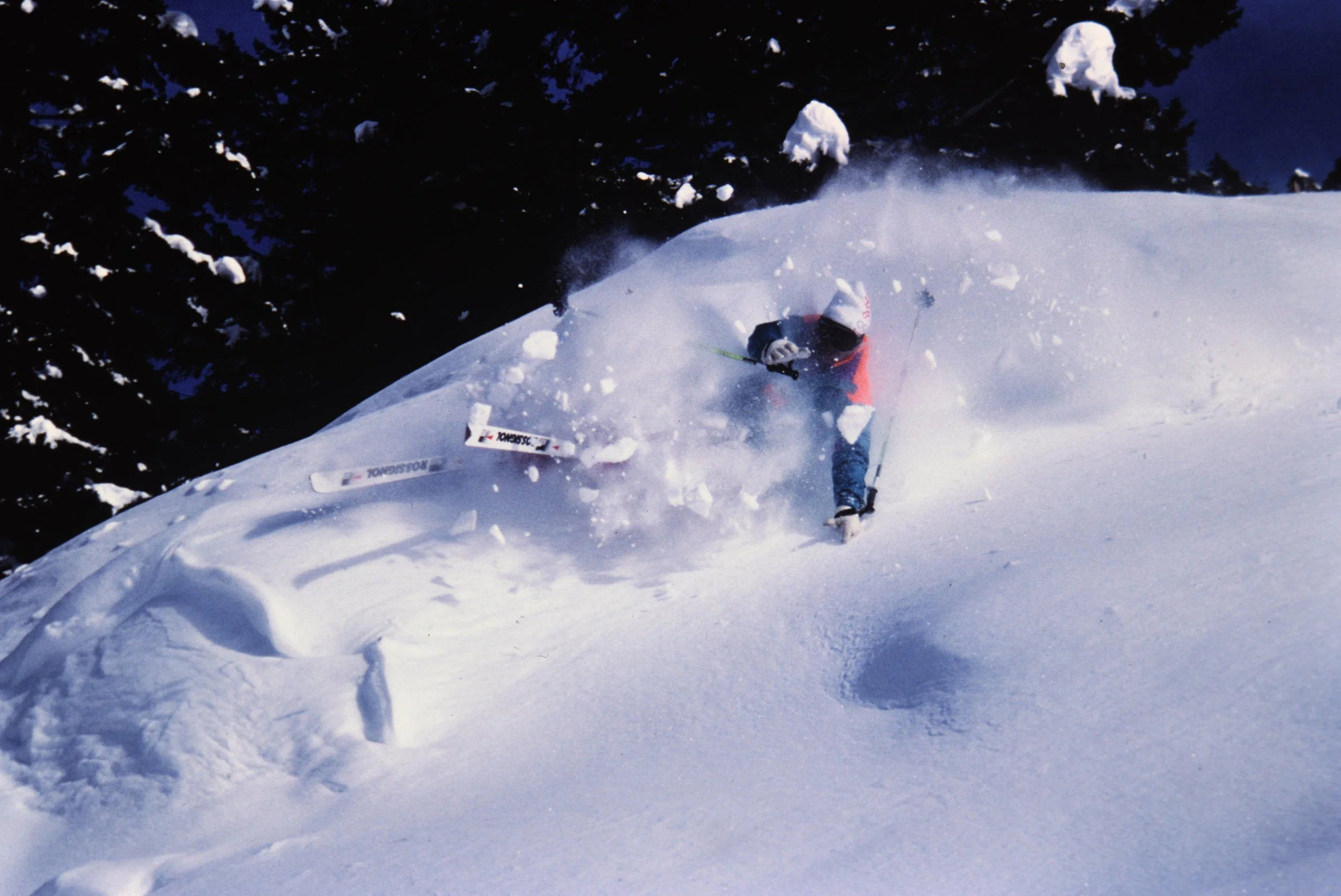
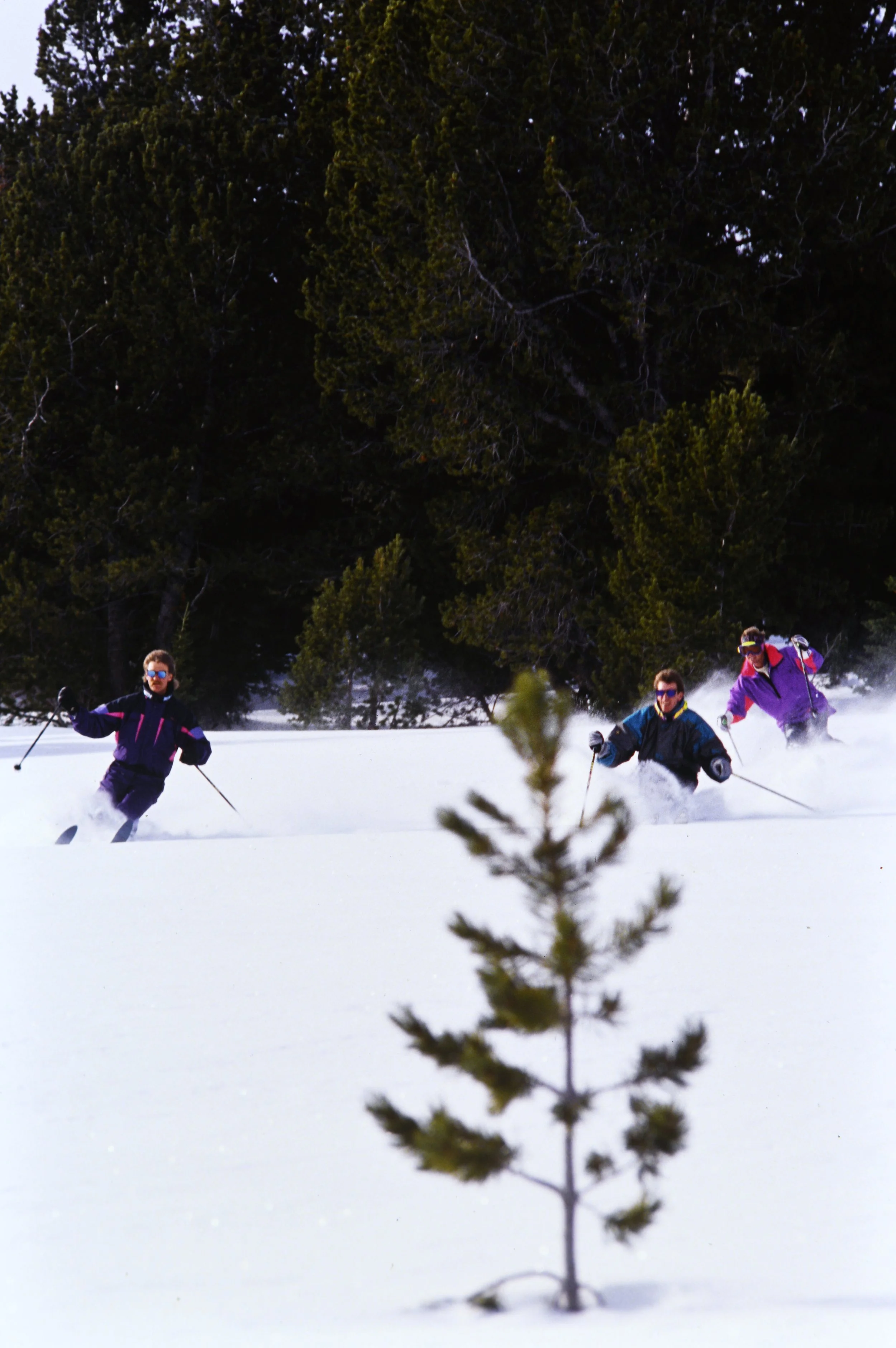
1976/77 Year of the Squirrel
Bill Janss, despite his wife’s death, wants heli-skiing to continue. He was in the process of selling The Sun Valley Resort to Earl Holding. It seems like Bill Janss wants Sun Valley Heli ski to be something more than the Sun Valley Company is prepared to invest in it. He wants it to continue, so he offers it as a friendly takeover.
Carl Rixon, Greg Morrison, John Donderro, and Roger Bergdahl, all Sun Valley ski patrolmen, got together and incorporated Sun Valley Helicopter Ski Guides LLC.
This was still such a new activity that the name had to include helicopters and guides to help the public understand what it involved.
Carl and the other guides created the first commercial alpine helicopter skiing guide service in the U.S when they obtained a permit to fly guests from the resort in winter 1976/77.
Although there had been people skiing the backcountry using a helicopter before this, Sun Valley Heli Ski put in place the system that would give this type of skiing the opportunity to thrive here in the U.S.
Jack Mooseau came on as a guide that year.
Sun Valley Heli Ski was not able to fly that year due to limited snowfall.
The Western drought of the 1976/77 season hit all ski resorts hard. Up to this time, skiing had been growing and expanding; this year was the first to show the challenges of depending on Mother Nature for all the snow.
The Sun Valley Company invested in snow-making machines for the first time. They were able to get 3 runs open for the holidays. With the snow making Sun Valley was able to host a World Cup race as well. There was very little snow that year, but there was filming.
1977/78
Earl Holding bought the Sun Valley Company from Bill Janss in 1977. This was also the year Sun Valley Heli Ski quit using the Bell 47, and Danny Danielson is no longer flying as the pilot.
John Donderro and Roger Bergdahl operate as partners for one year, and then politely exit.
Bill Gehrke buys in as Rixon’s partner and trains as a guide.
Carl Rixon purchases more of the company and officially starts as Lead Guide and Manager of the newly incorporated Sun Valley Heli Ski. Rixon guided 79 days and logged 1.2 million vertical feet of skiing.
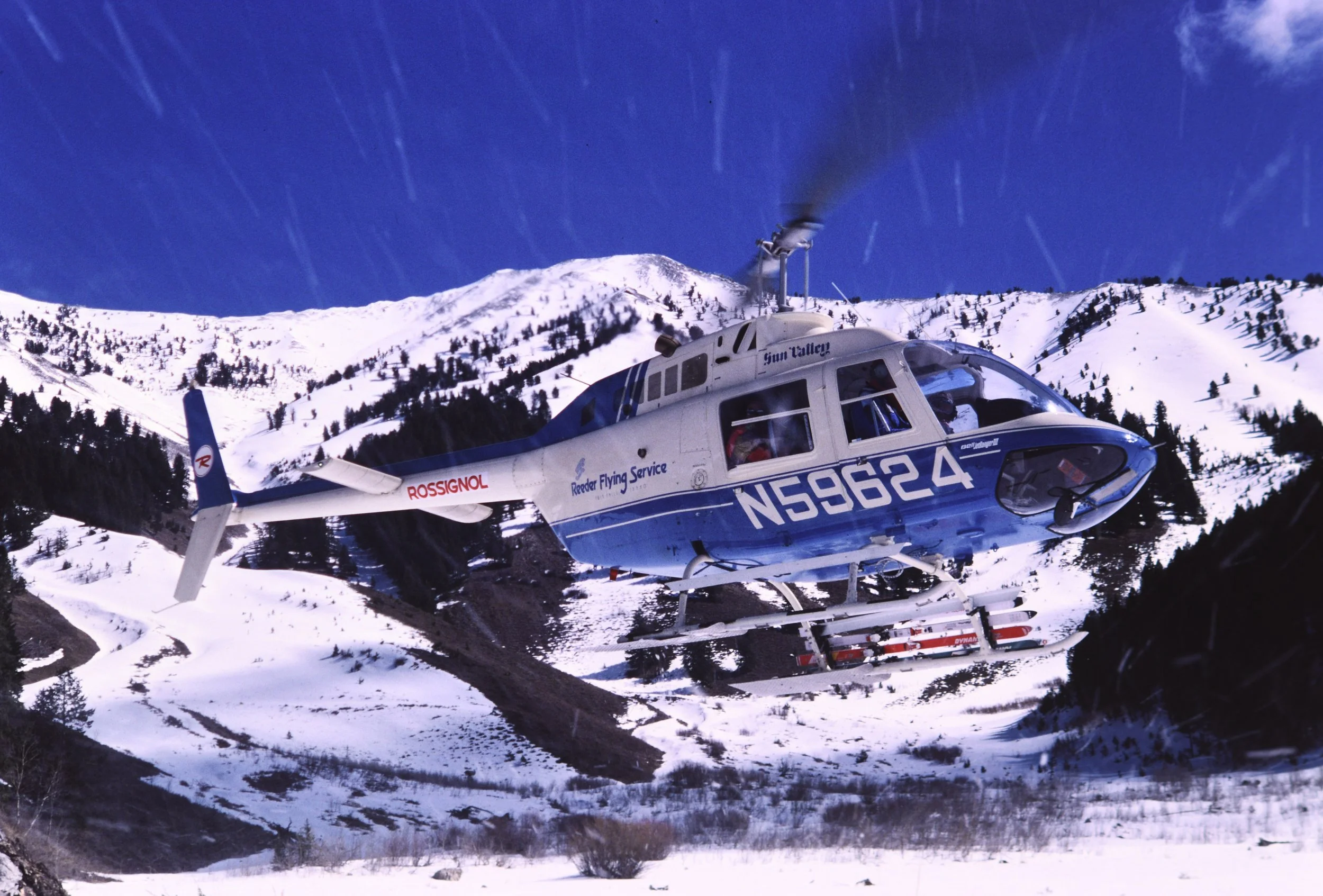
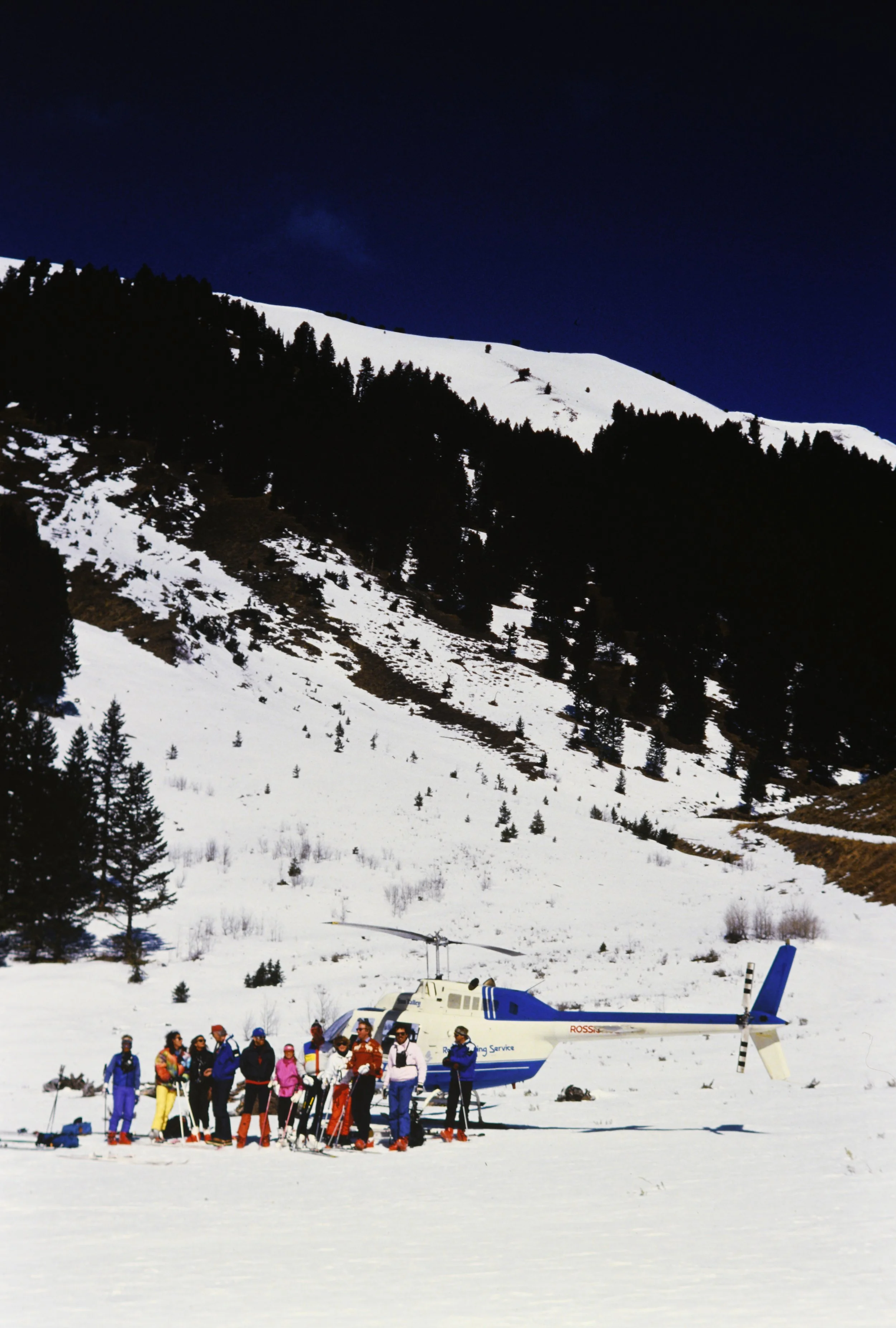
They flew 83 days that year, using two helicopters. A Jet Ranger was used to supply Round House and if needed was also used to get groups out heli-skiing. It was $125 for 5 runs.
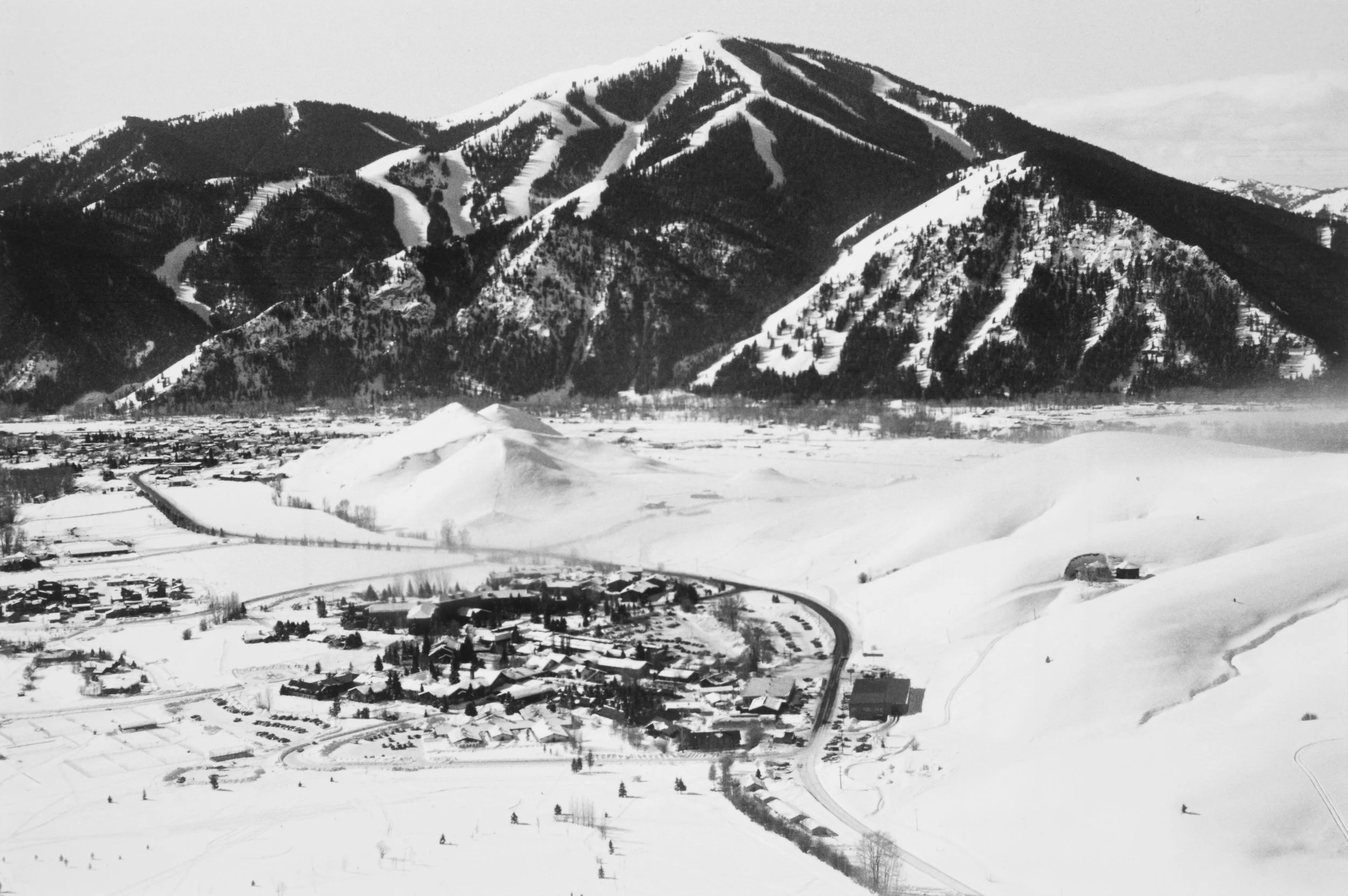
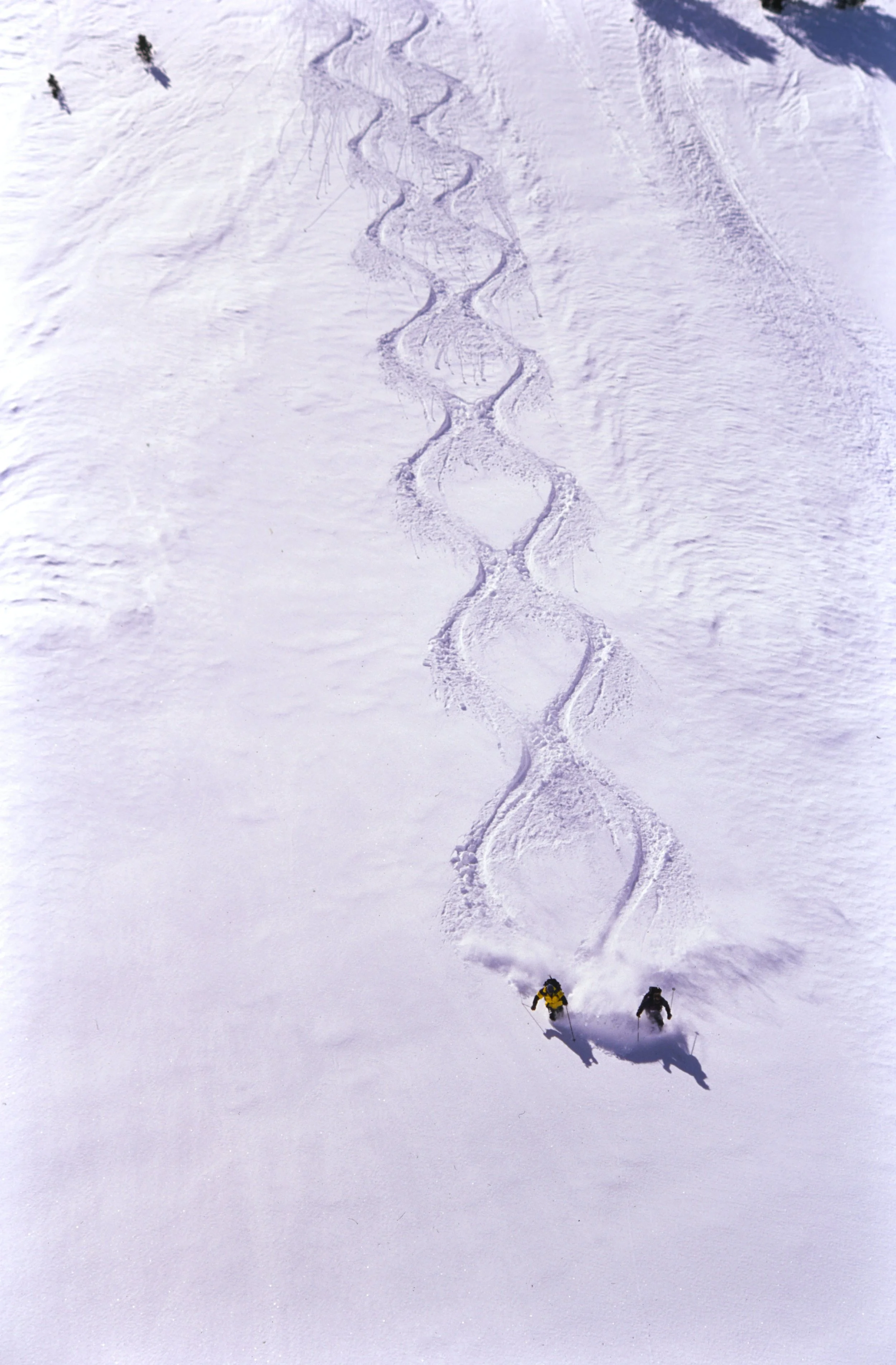
On February 14th of 1978 the one and only Figure-8 contest occurred. It is held above Penny Lake out Warm Springs, working their way down the ridge as the contest progresses. 26 teams competed and Mike Lloyd and Jerry Holdley were and still are the Wood River Figure 8 Men's Champions, and Pam Street and Barbara Amick the Women’s Champions. People could see the tracks from Baldy and this drew their attention to heli-skiing.
Although heli skiing has always been considered for the affluent, Sun Valley Heli Ski has always had respect for the local skiers. Rixon would put out specials, mainly in the late/corn season, and they would run a shuttle.
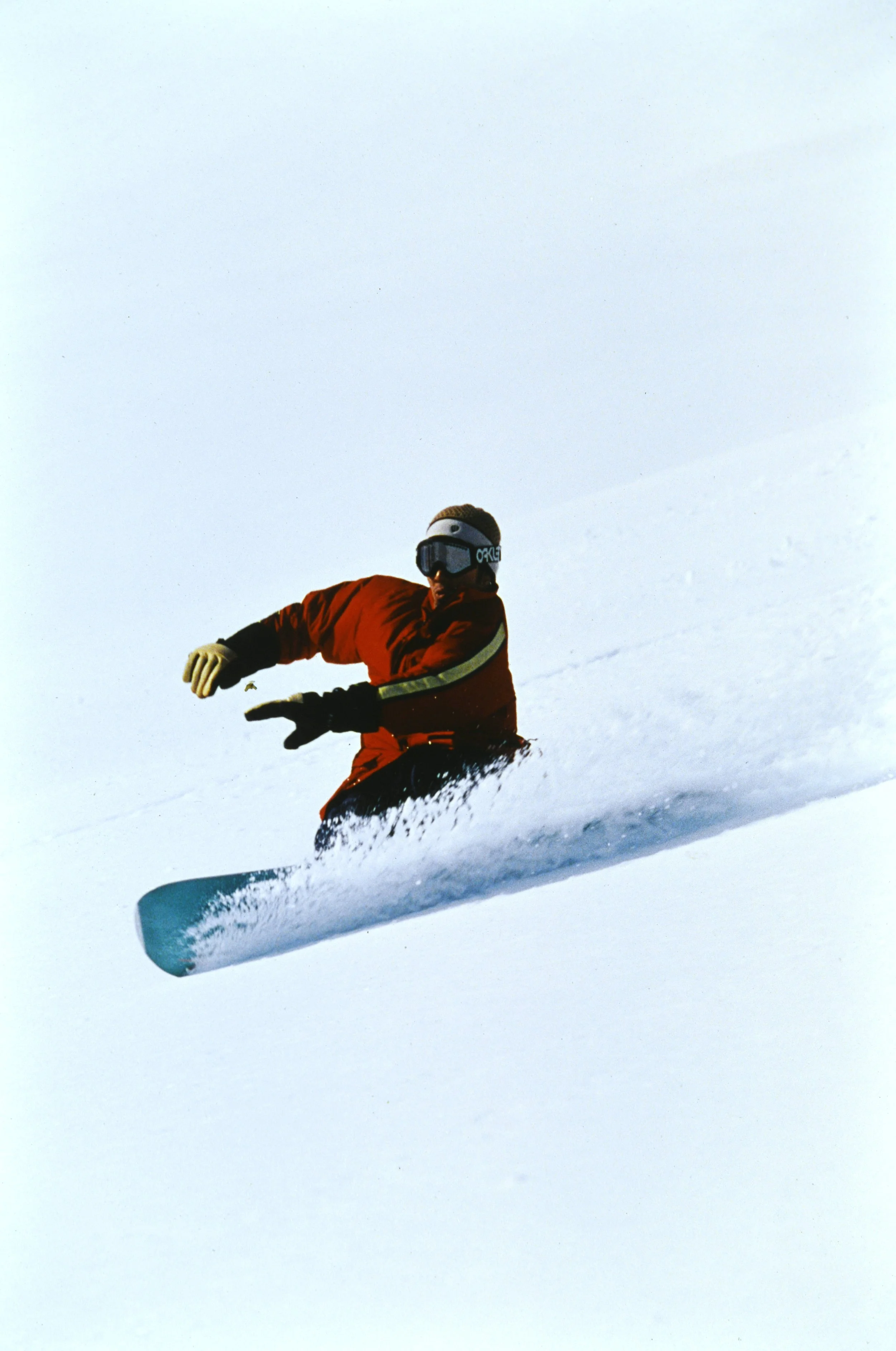
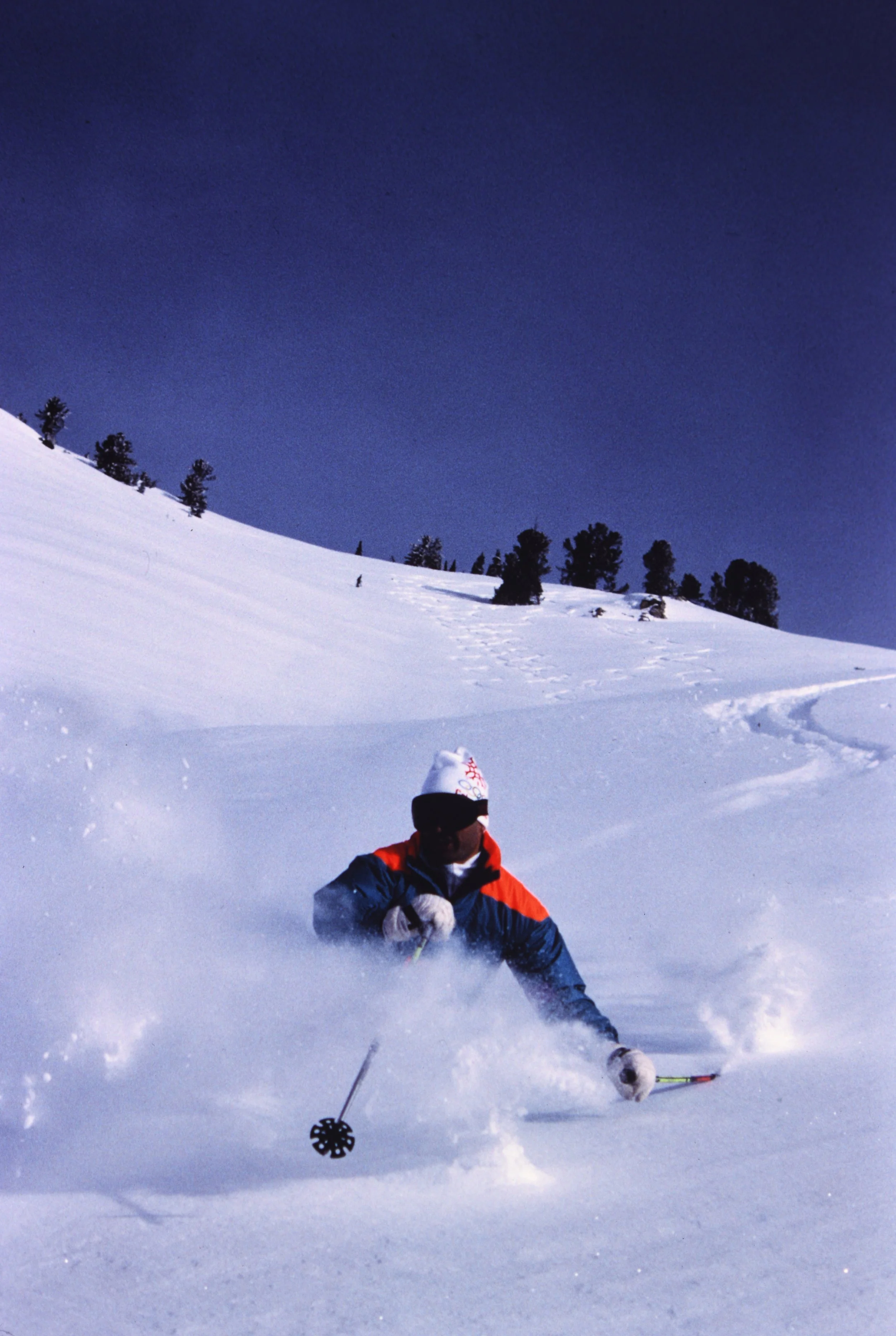
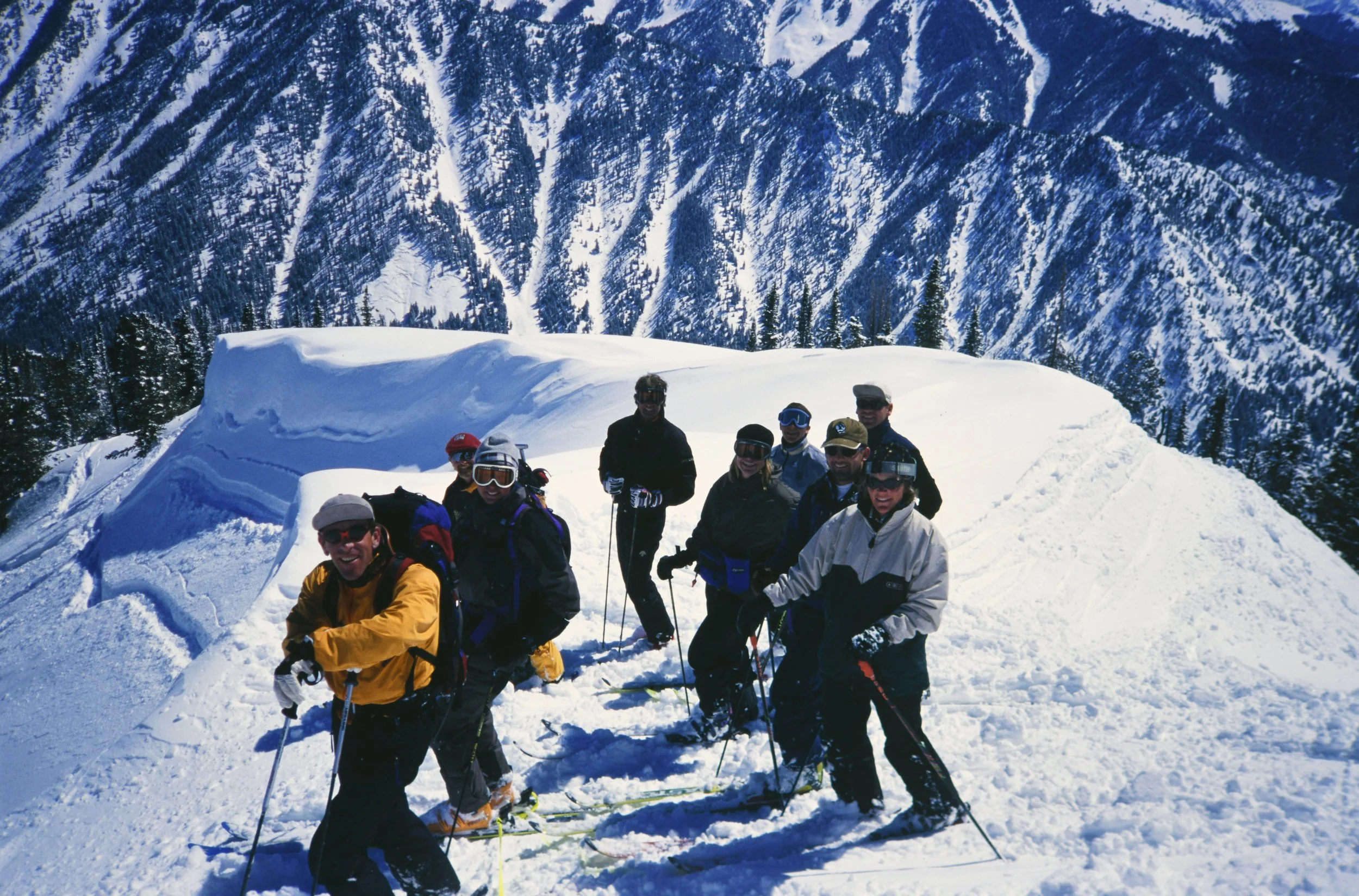
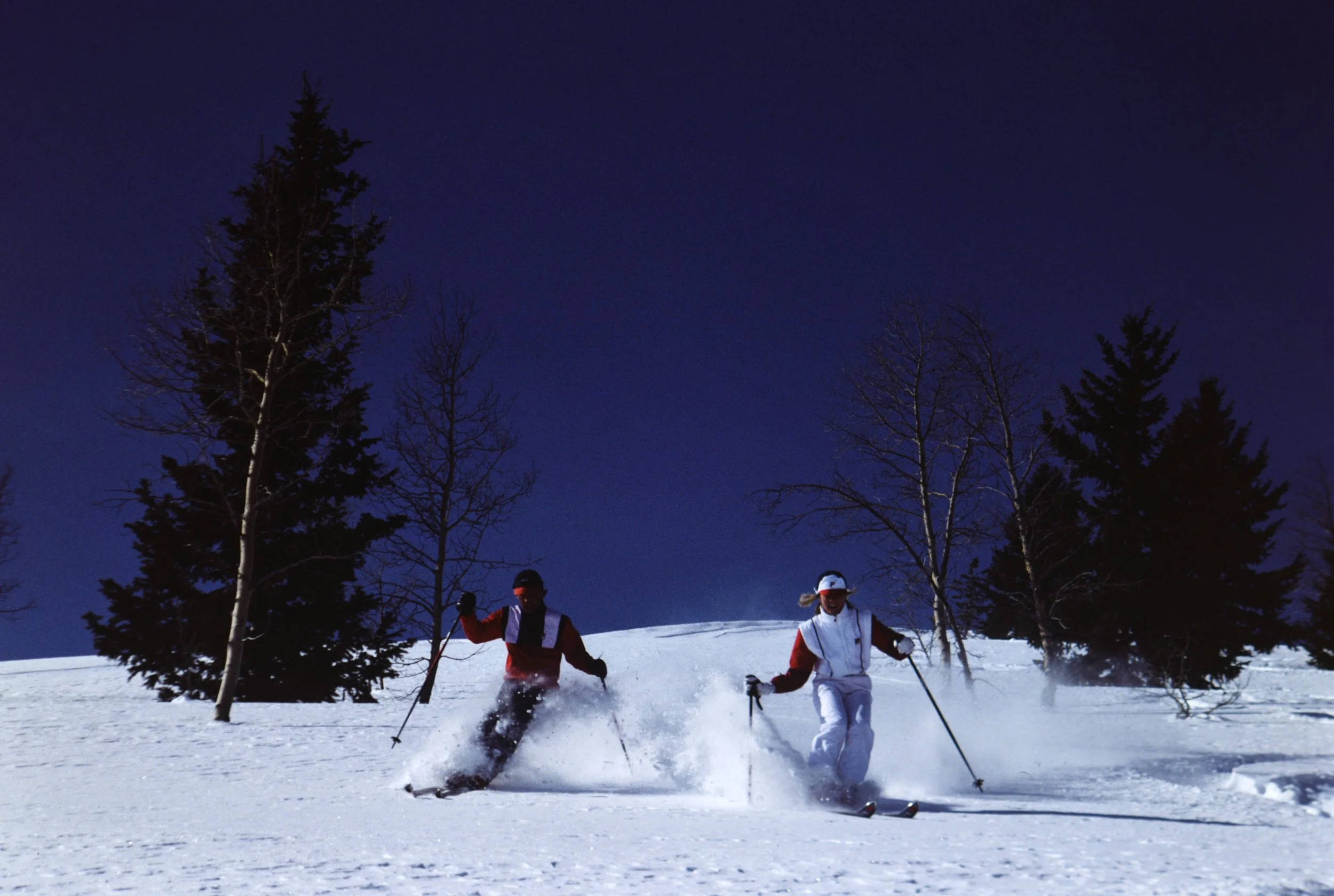
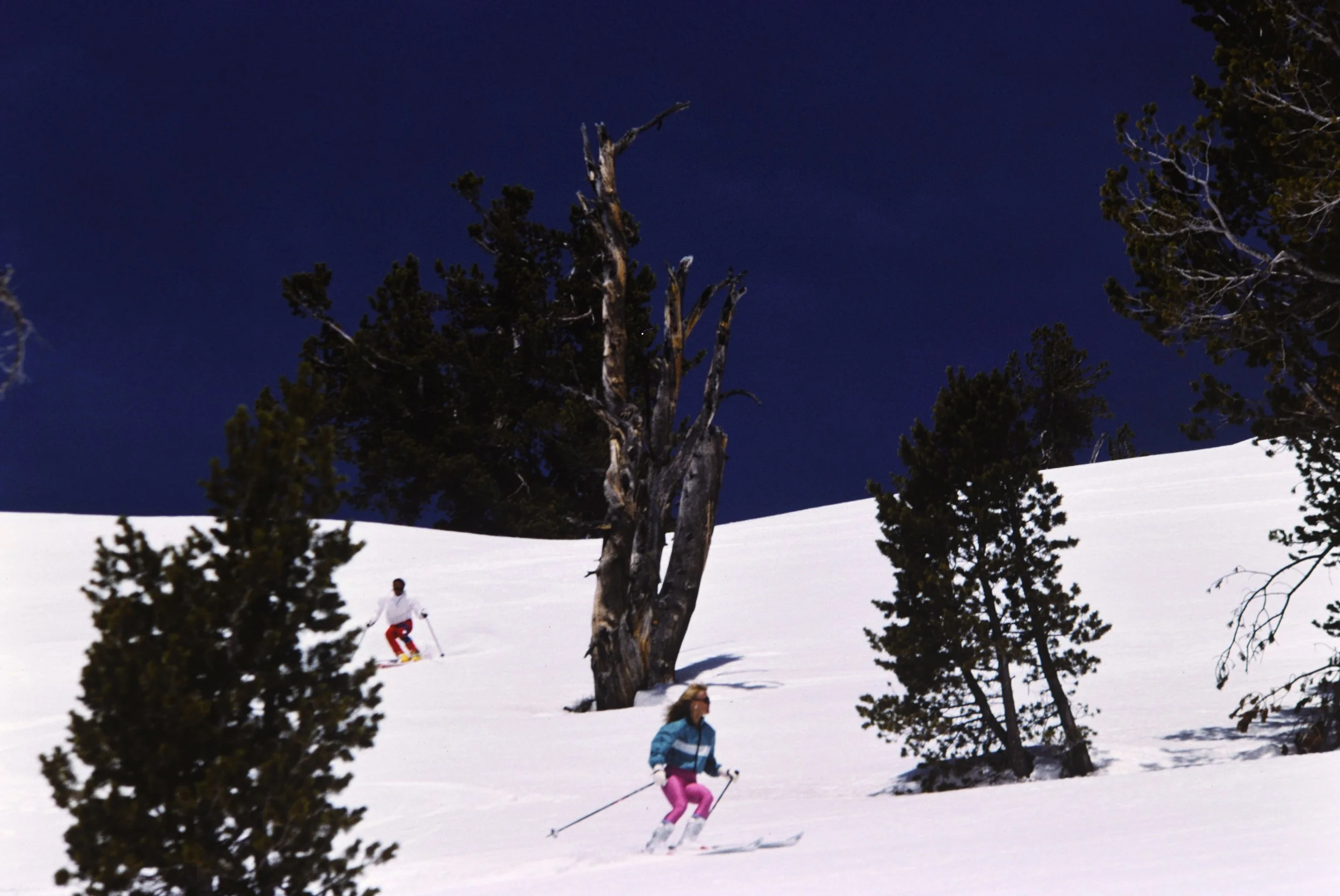
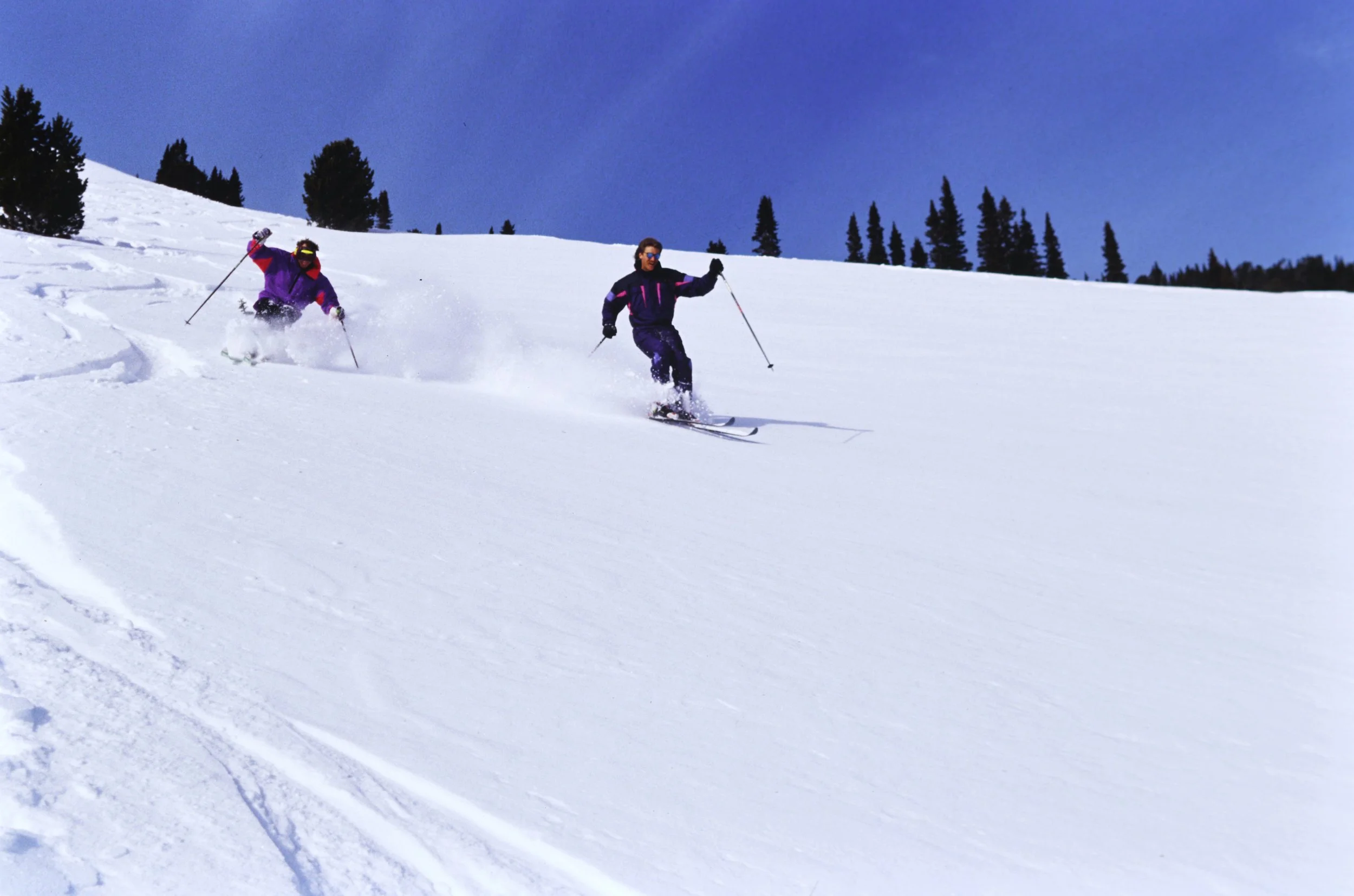
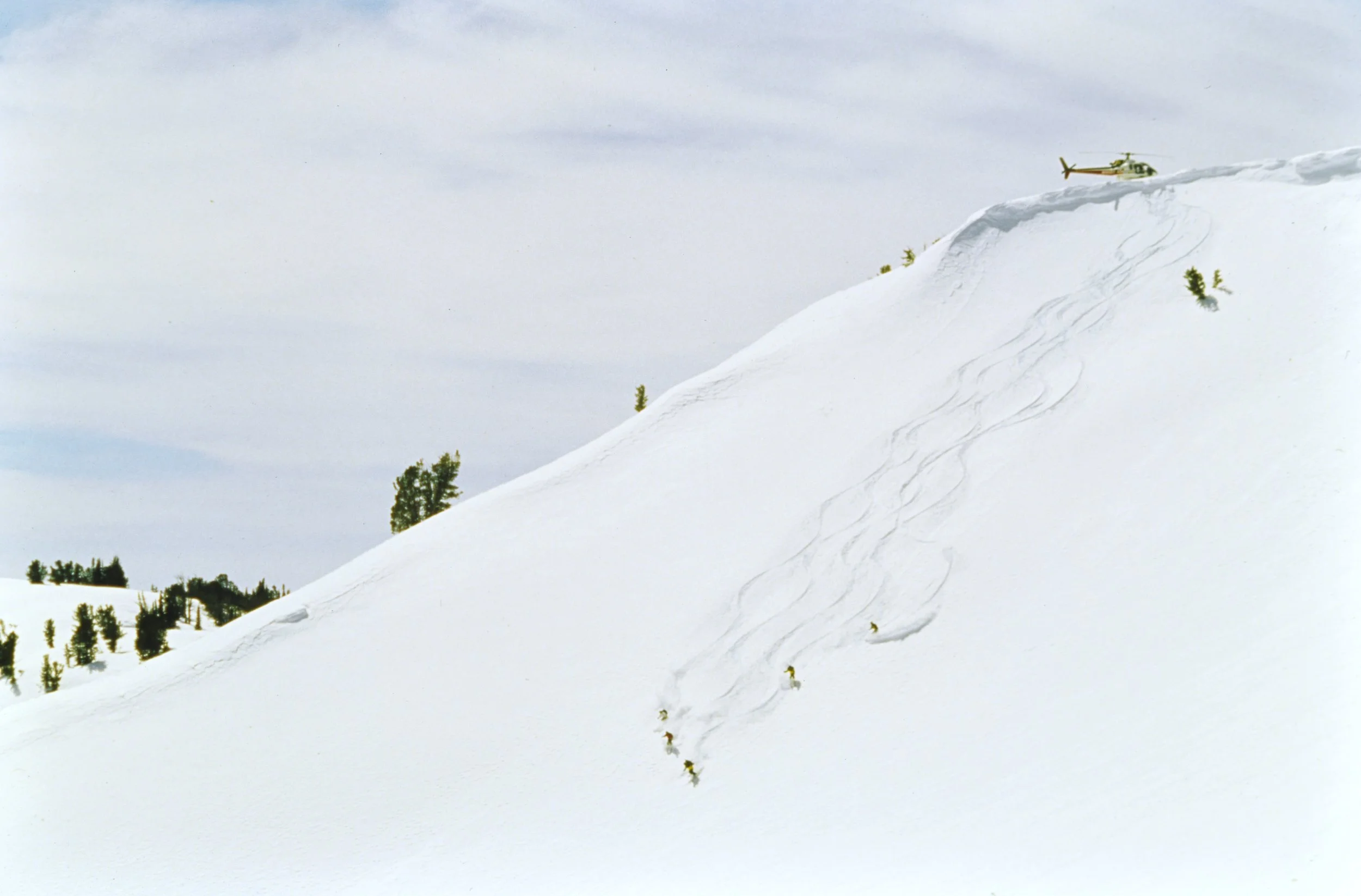
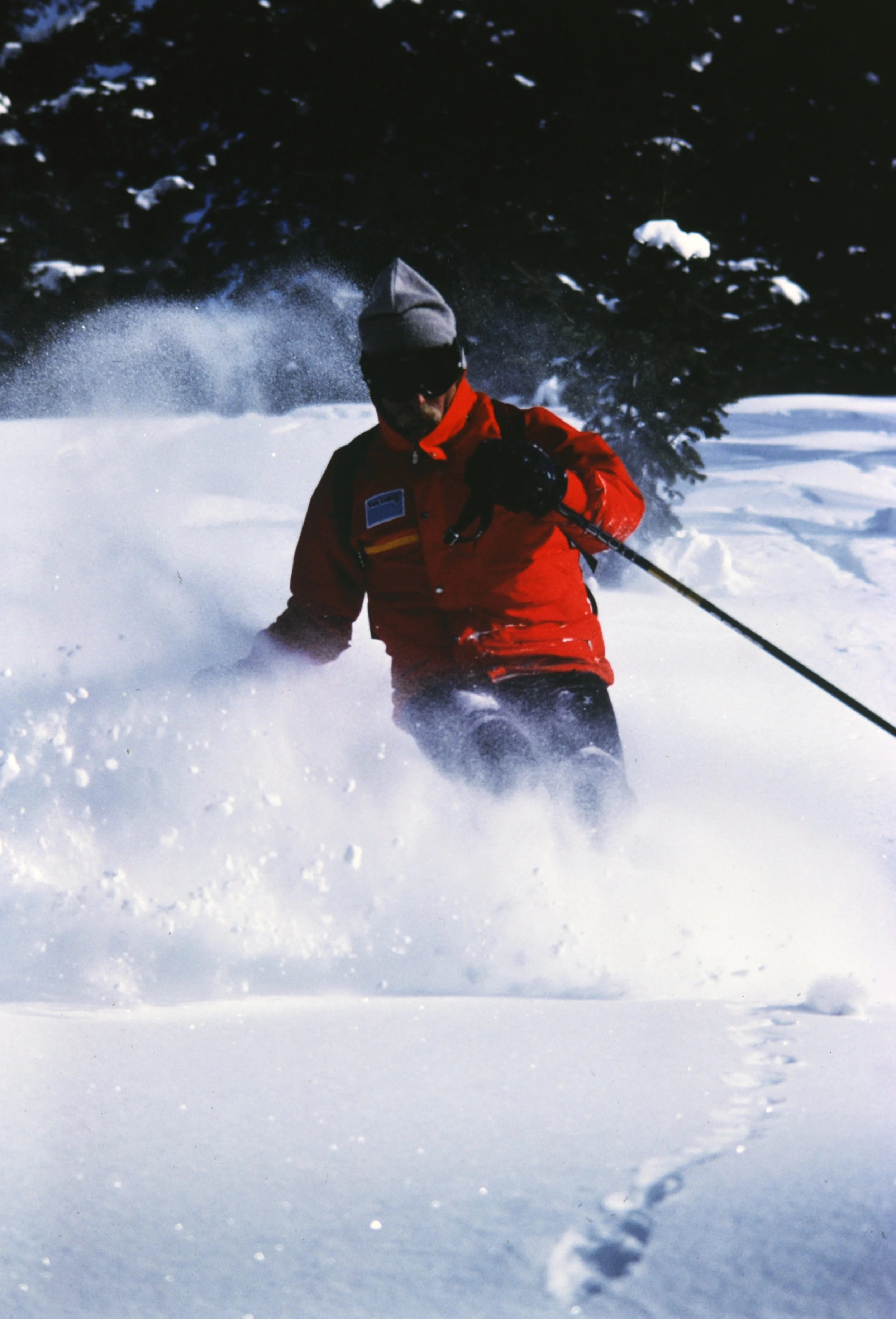
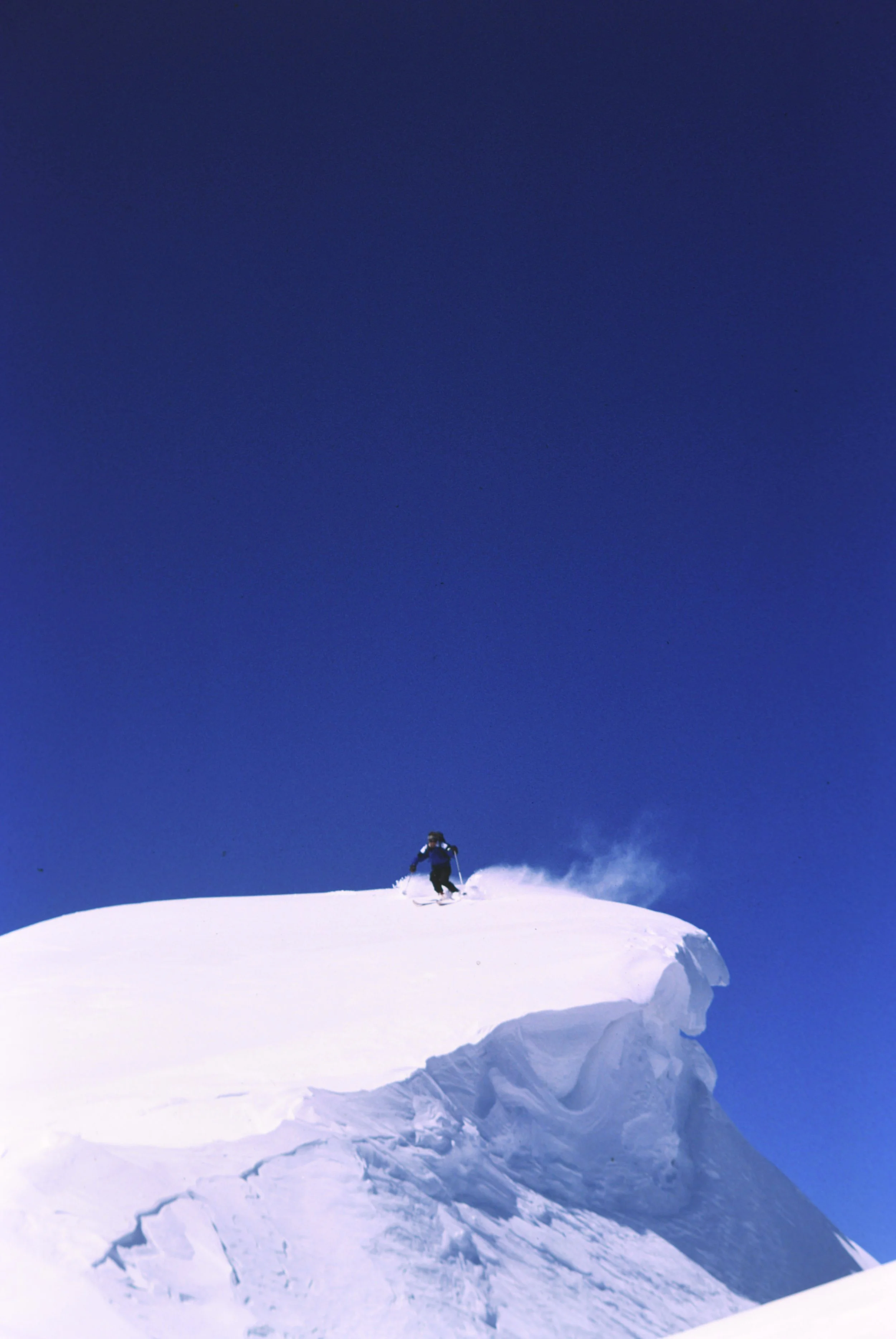
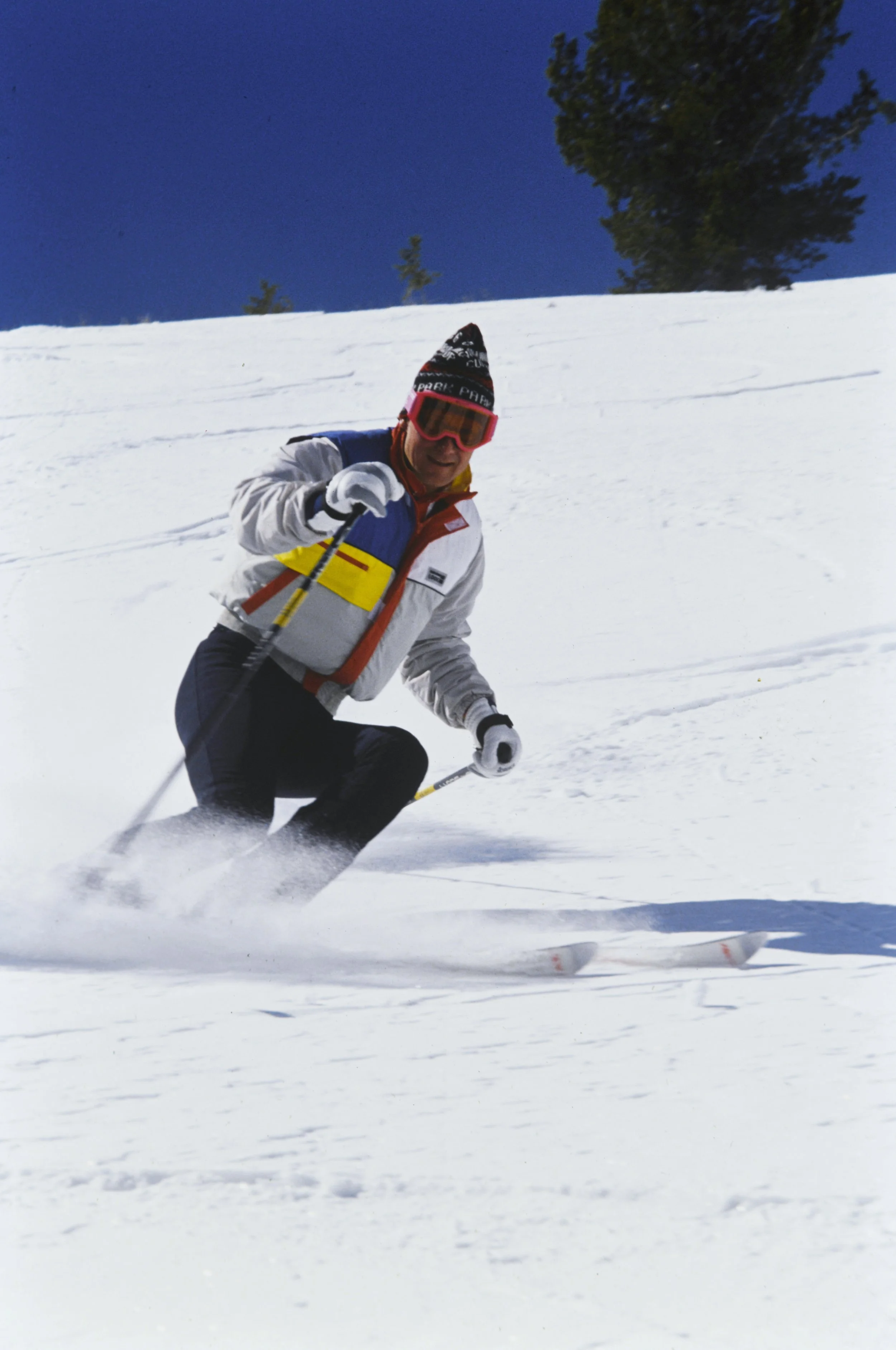
“Pick an area you could hardly get lost in. Put a couple of guides up top for unloading the helicopter and a couple of guides on the bottom of the run. Cut’em loose and give them a ski run for $25. There was a tailgate party there that wouldn’t quit”
— Carl Rixon
1983/84
This was a big snow year. Sun Valley Resort was able to remain open until early May.
Bozo Cardozo arrives in Sun Valley.
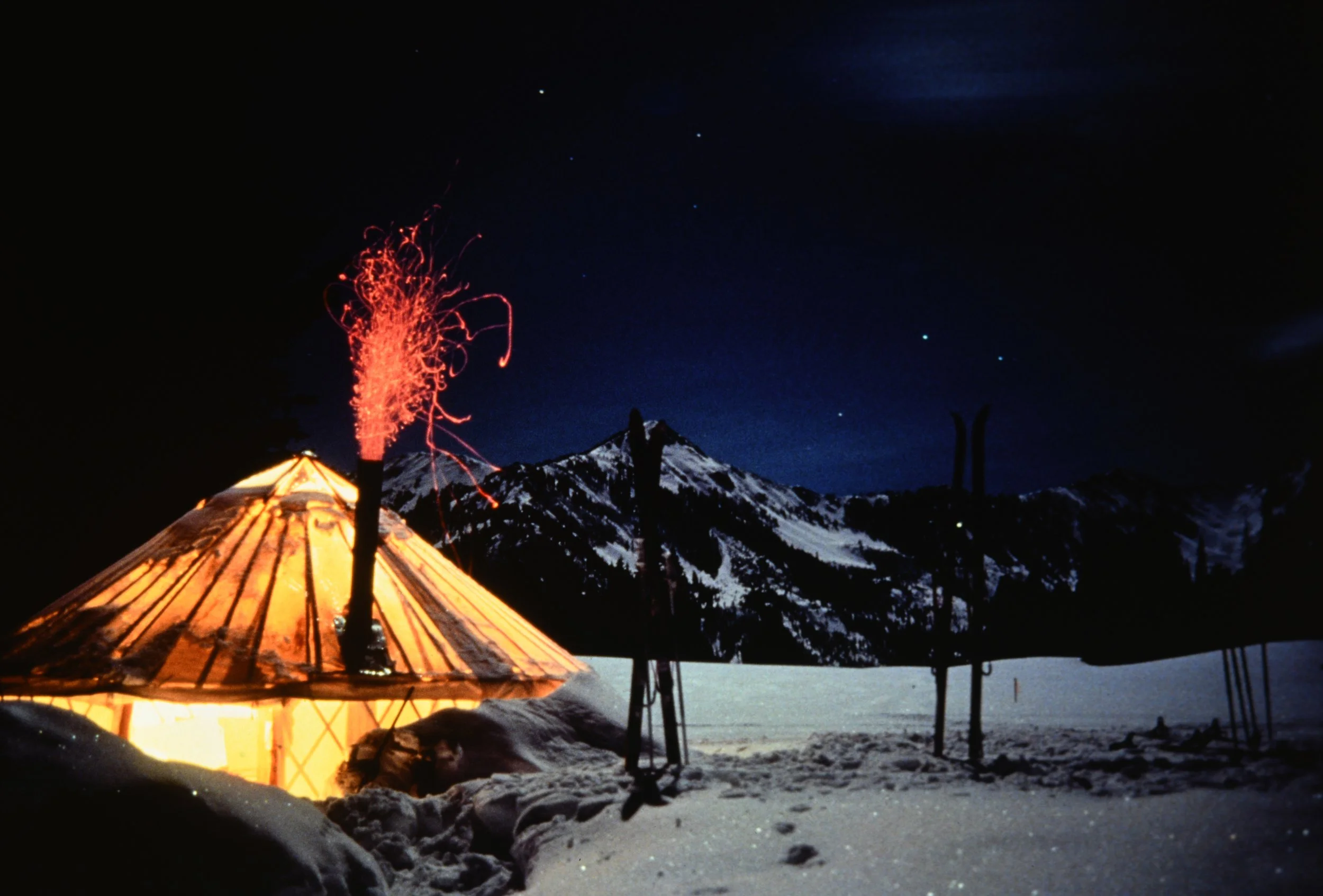
Rick and Janet Kellam built two yurts and received a special use permit for them in the Pioneer Mountains. A ski mountaineering program was established, often using the heli to begin tours in the surrounding peaks.
1985
Bozo and Pete start as guides at Sun Valley Heli Ski.
1986/87
Another drought year, there was no snow until the end of February. Owner Mark Baumgardner talked about trying to stay open until one week after the resort closed.
Rick Barker becomes a partner with Mark by purchasing ⅓ of SVHS with the equity of the yurts and the program value.
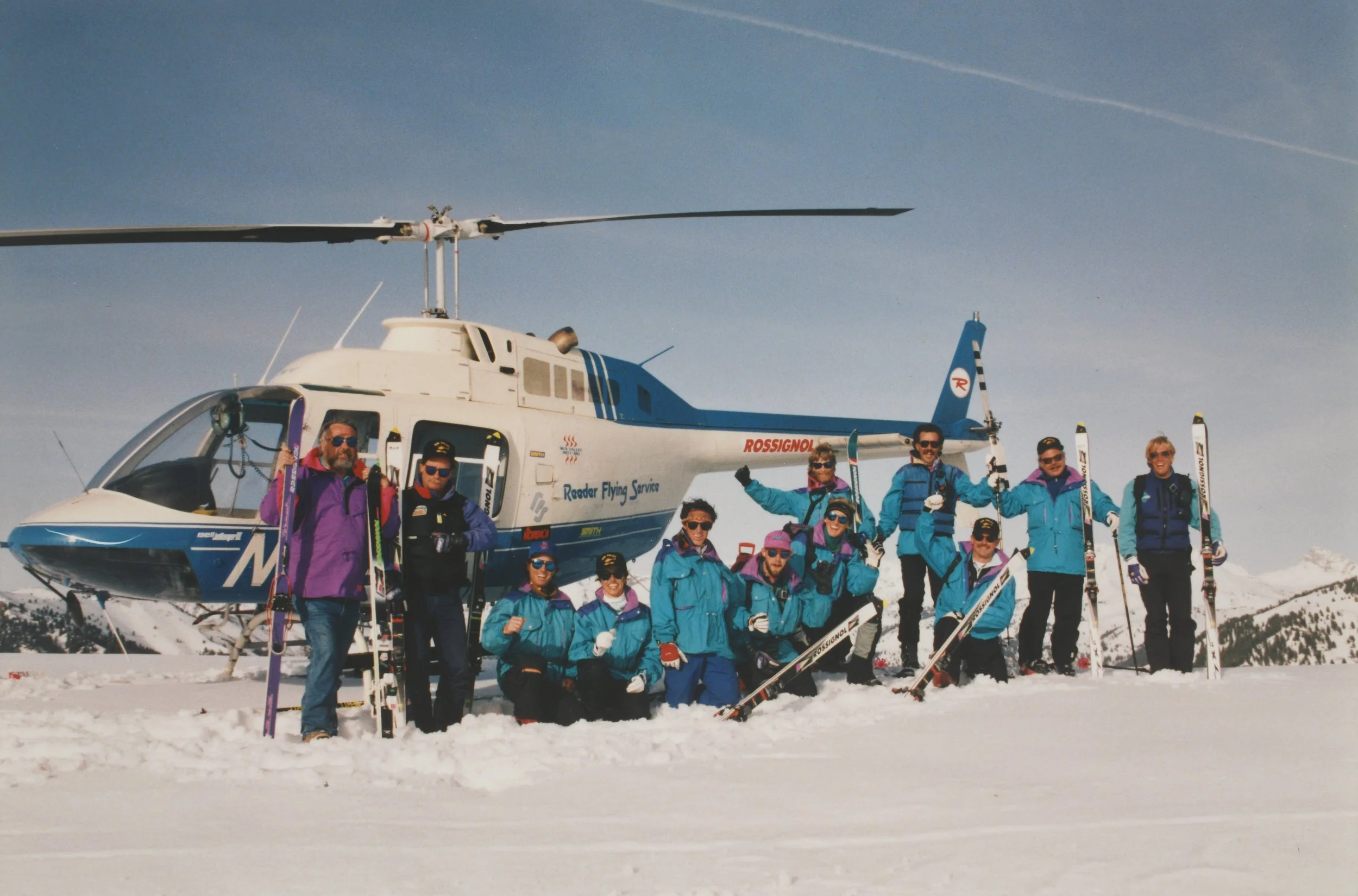
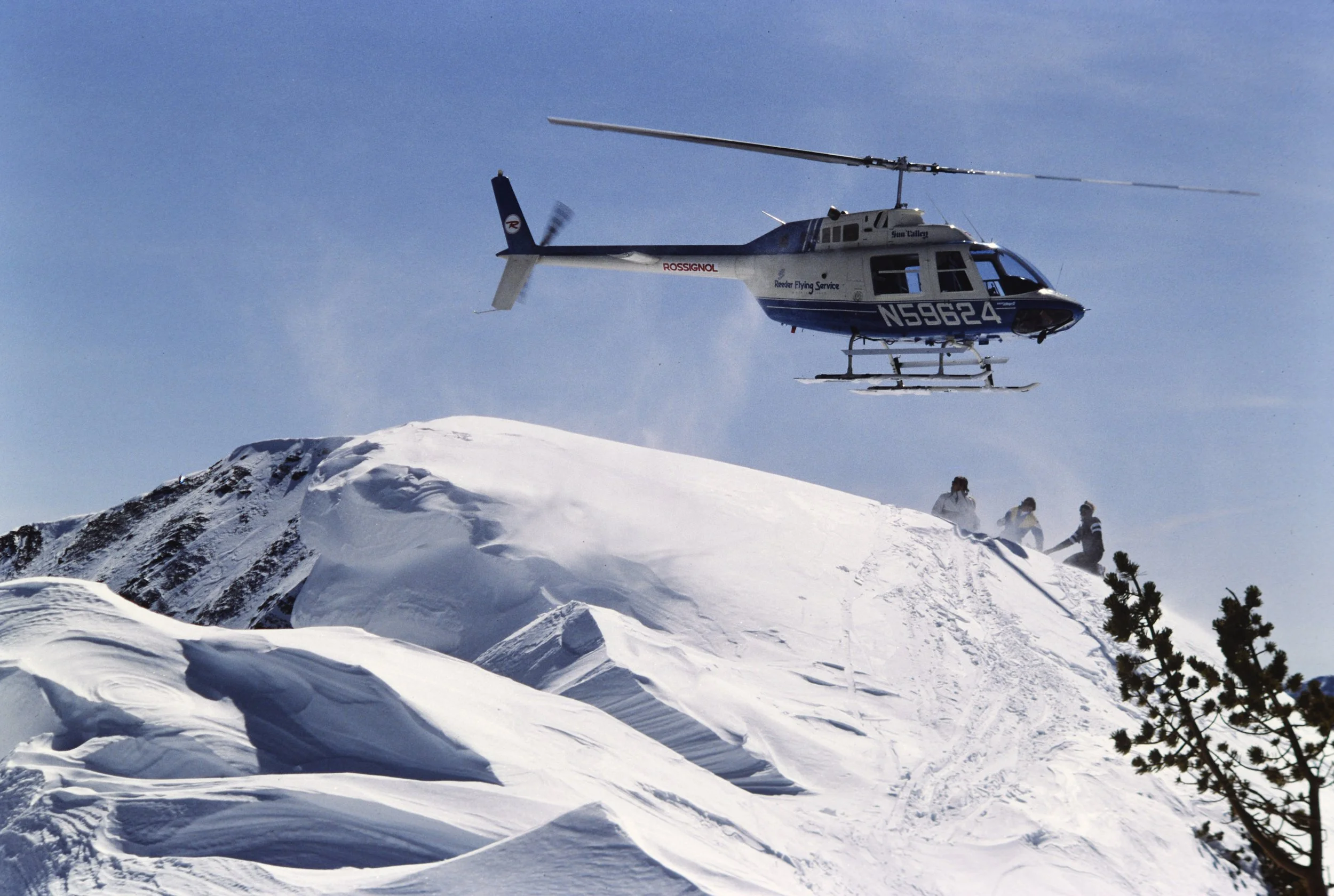
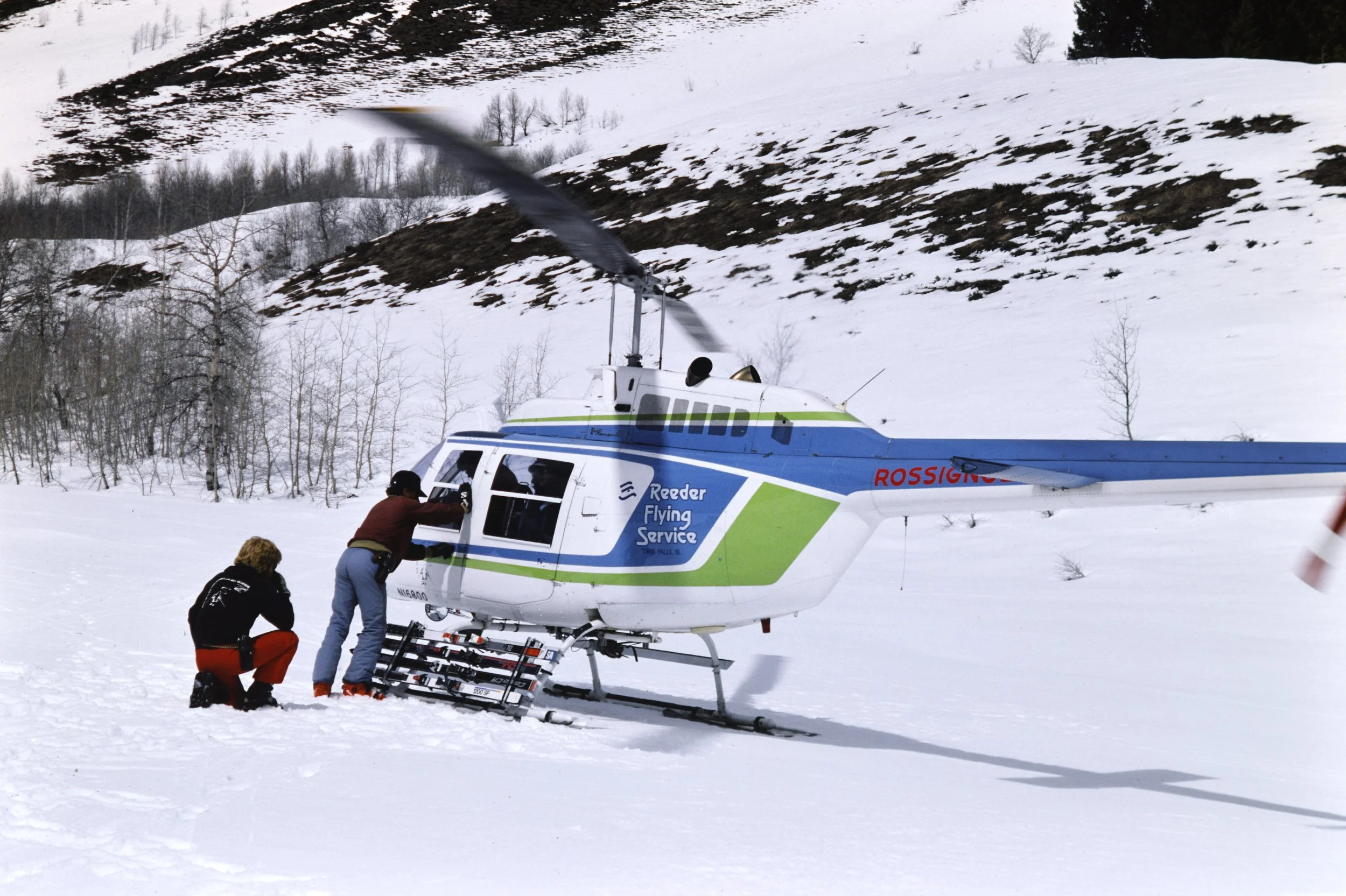
The insurance costs for the helicopter operators doubled and Reeder Flying Service got out of supplying helicopters for heli-skiing.
1988
Mark and Rick Barker buy Carl Rixon out. Then Mark buys out Rick. Carl mentioned he was seeing the beginning of global climate change and returned to the ski patrol to serve until 2017.
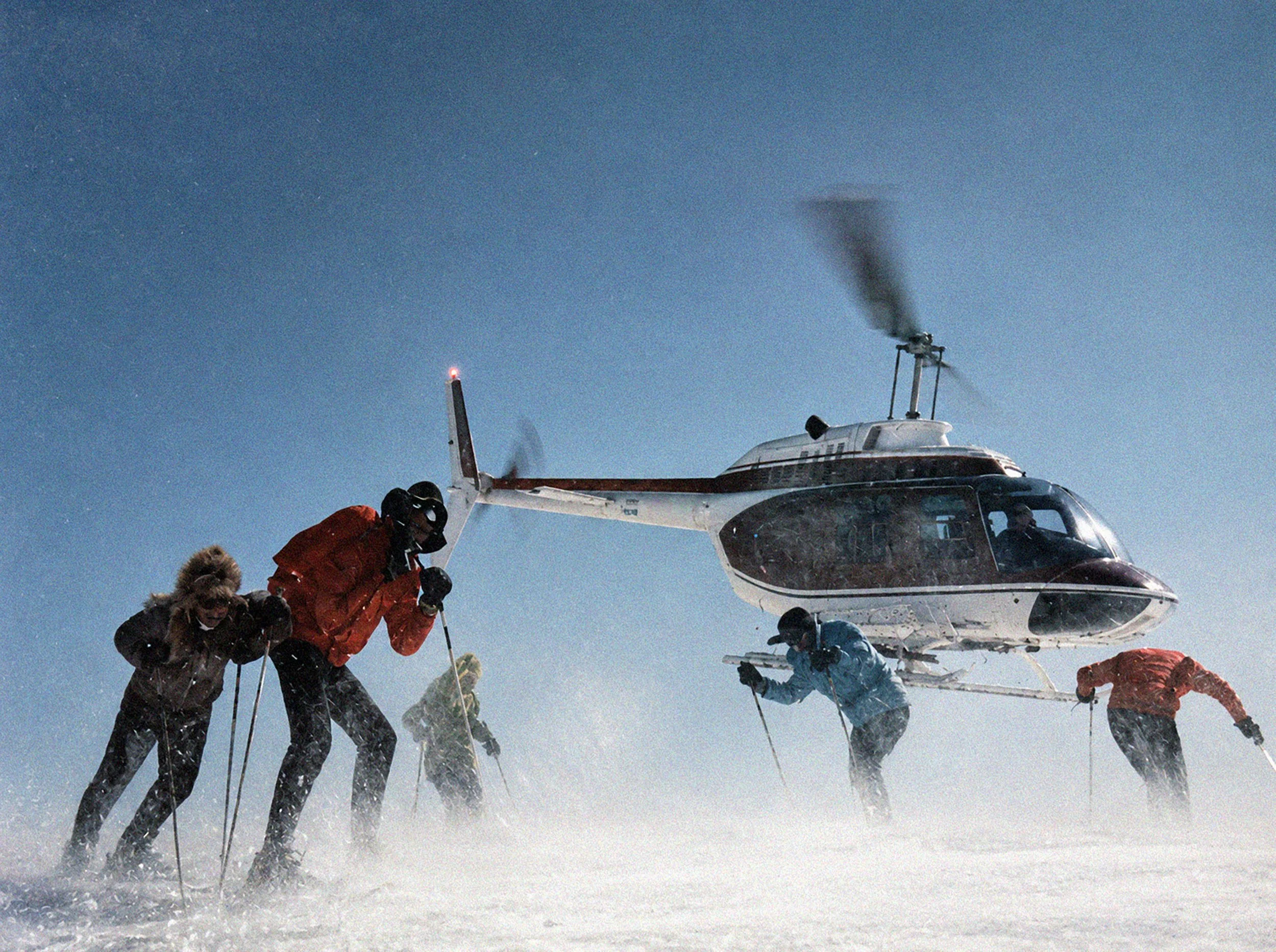
1990
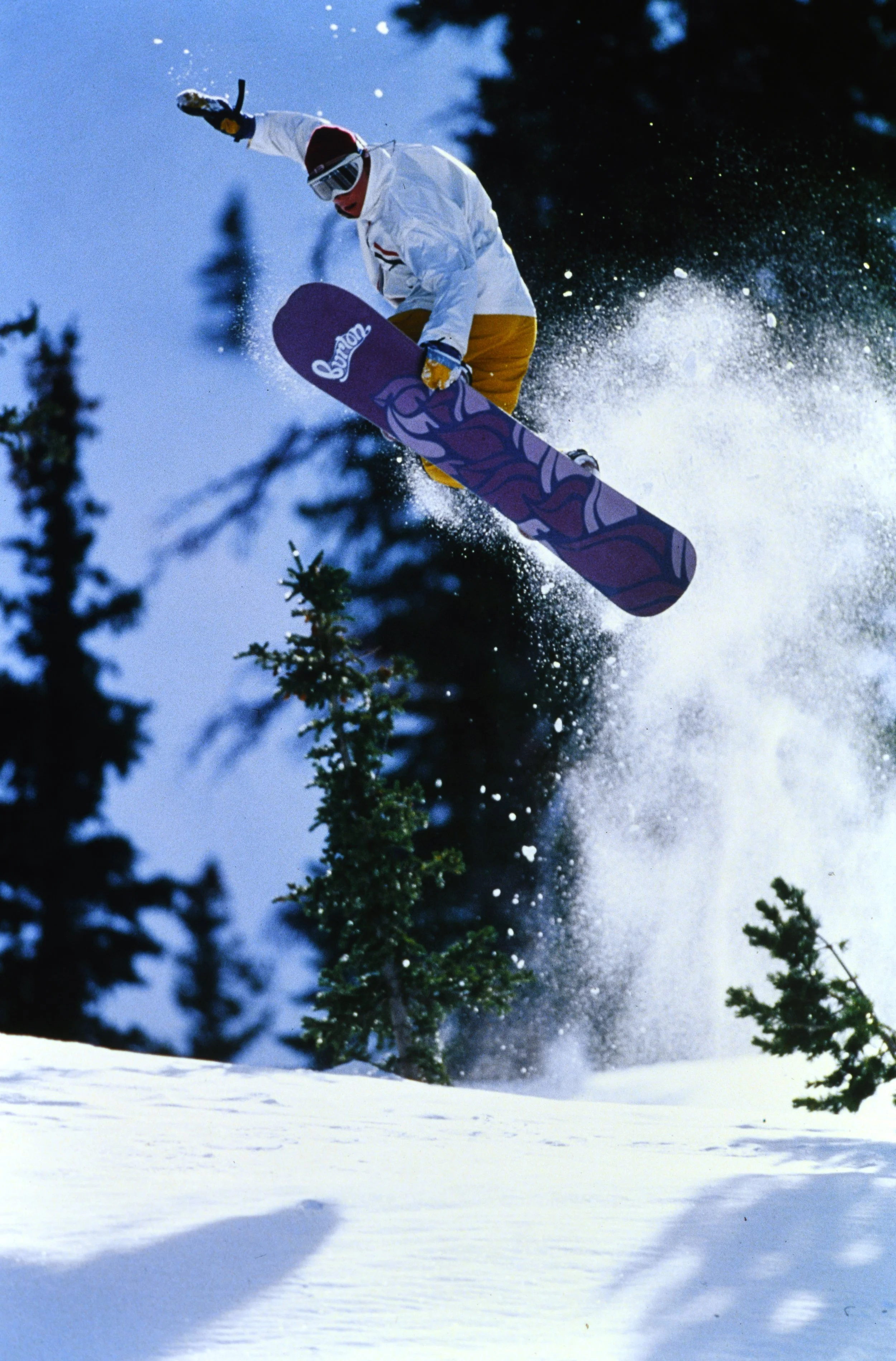
In the early 90’s fat skis came out. The owner of Atomic cut a snowboard in half and started skiing on them.
The Atomic Powder Plus and the local Ketchum-based Wolf Cold Smoke were some of the earliest fat skis. Rossignol came out with their fat skis a little later, the Bandit in the early 2000’s, and the iconic S7 in 2007.
1991–1992
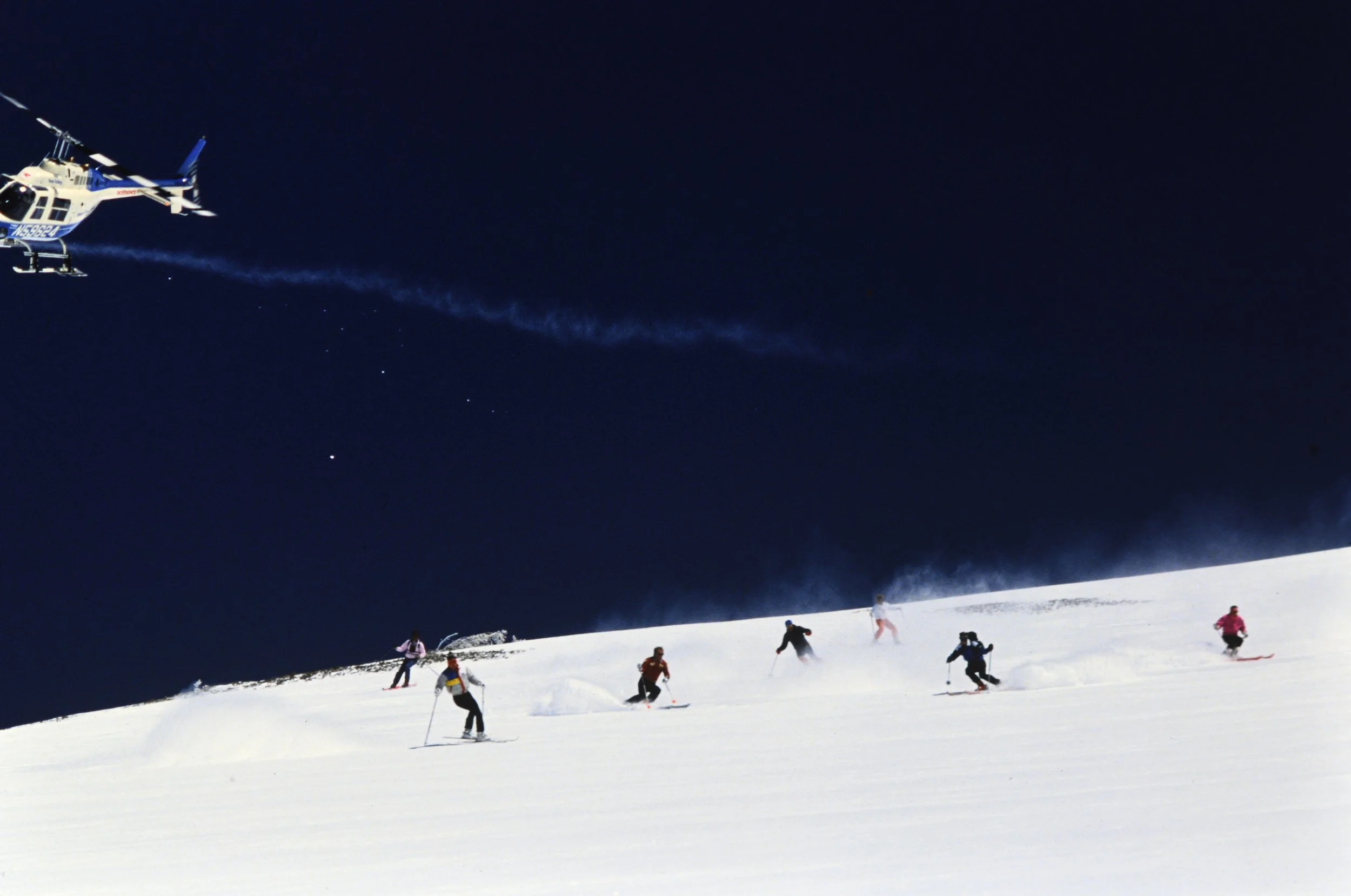
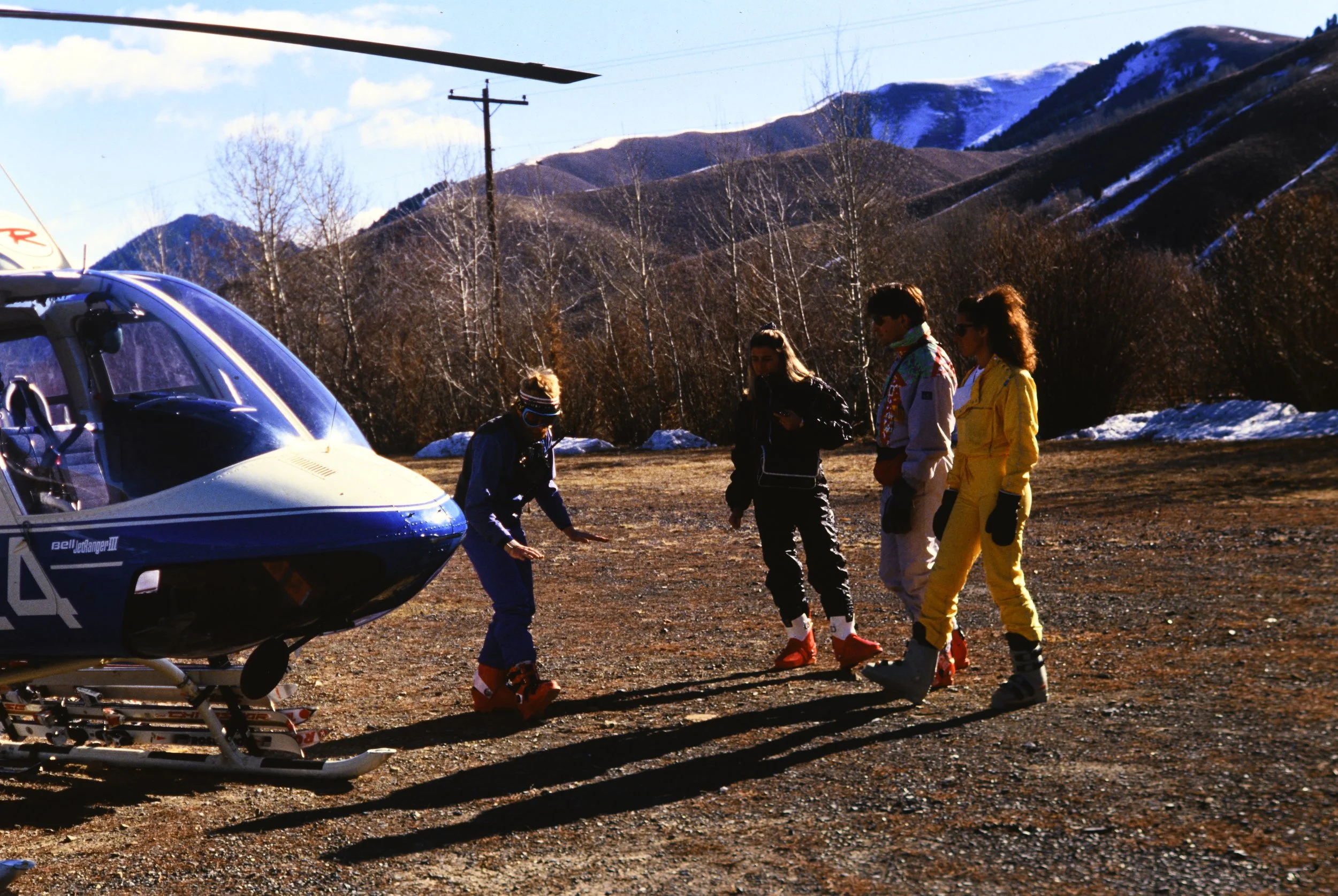
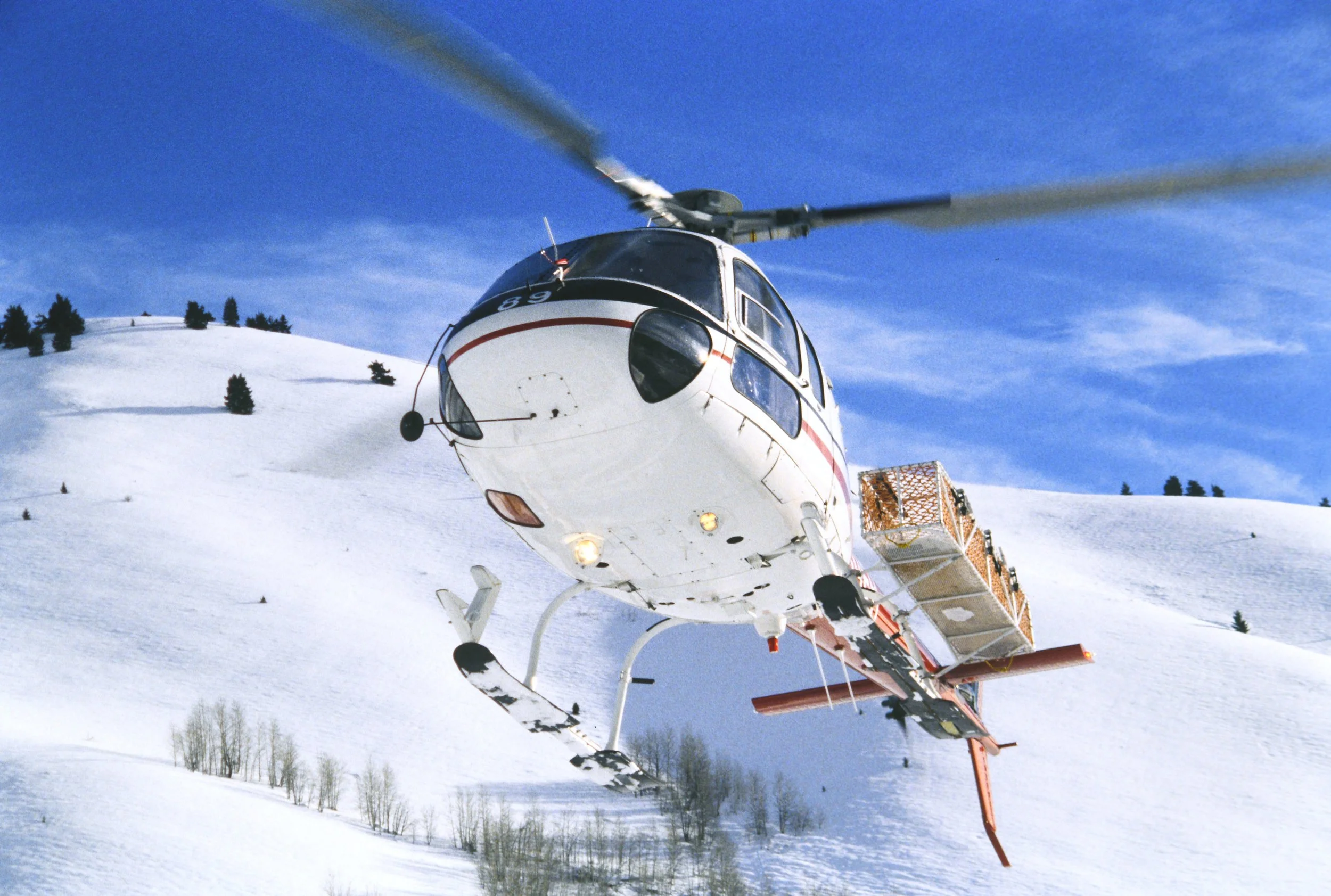
Sun Valley Heli Ski changed from a Jet Ranger to an A-Star, which increased availability to backcountry terrain tremendously. Although there was a significant cost increase, the speed and the range it had were another progression in heli-skiing. More remote terrain became available and it reduced flight time. The fuel limitations meant the Jet Ranger barely made it over the divide, you could do 1 run, then had to fly back for more fuel.
Jim Reid remembers the first lift-off in the A-Star with Rick, and being blown away by the performance of the helicopter.
1992
In the fall , Carl flew Rick and Mark over remote terrain in the Western Smokies. As a forecaster for SVHS and USFS Avalanche Center using remote weather telemetry, Rick had observed that the area was receiving roughly 30% more precipitation. Rick identified several areas using paper maps and a 3-D wall map with heli-ski terrain potential in the zone. One overflight confirmed the potential in Pinyon, Snowslide, WF Big Smoky, and Paradise. A trail permit was issued by USFS and later included in the SVHS permit area.
1999
Together with Carl Rixon, who is also a general contractor and owner of Rixon Construction, Mark Baumgardner built the Smoky Mountain Lodge (SML), nestled 5,500 feet high in the mountains at the upper end of the South Fork of the Boise River. This 4,000-square-foot basecamp, surrounded by the picturesque Sawtooth National Forest, is the only fly-in heli ski destination in the lower 48. Powered by a diesel generator and state-of-the-art solar batteries, with a river rock fireplace, granite countertops, wood-fired sauna and hot tub, private chef and sleeping room for up to 12 guests, the SML is essentially a five-star mansion in the wild.
2000
Sun Valley Heli Ski started using the Smoky Mountain Lodge in 2000. It was a Y2K generator.
2002
Durrance Mountain starts five years of increasingly limited access to Sun Valley Heli Ski. To reduce conflicts with backcountry skiers, the entire area is closed on weekends and can only be used every other month. Over five years, the number of available days decreased annually to zero.
Prior to this Durance was the mainstay throughout the 70’s and 80’s for SVHS.
Carl Rixon and his group consisting of Leroy Kingland, Alex Murray, and Steve Myer set the day record there- 10 runs, 33,000 vertical feet.
Mark Baumgardner started using more Westerly terrain, areas like Frenchman’s, in response to losing Durrance and feeling the start of climate change.


2007
Epicquest bought Chugach Powder Guides and Sun Valley Heli Ski.
2008
There was a volcanic event that covered the Alaskan slopes in ash. This made it very challenging for Epicquest
2012
Epicquest was not able to continue after this, and Jay Levine, an owner in the company, took over Sun Valley Heli Ski
2024
In June of this year, long-term employee and operations manager Alex Kittrell bought Sun Valley Heli Ski
Sun Valley Heli Ski History
If you’ve got your own story to add to the Sun Valley Heli Ski History we would love to hear from you! Send us a note below: